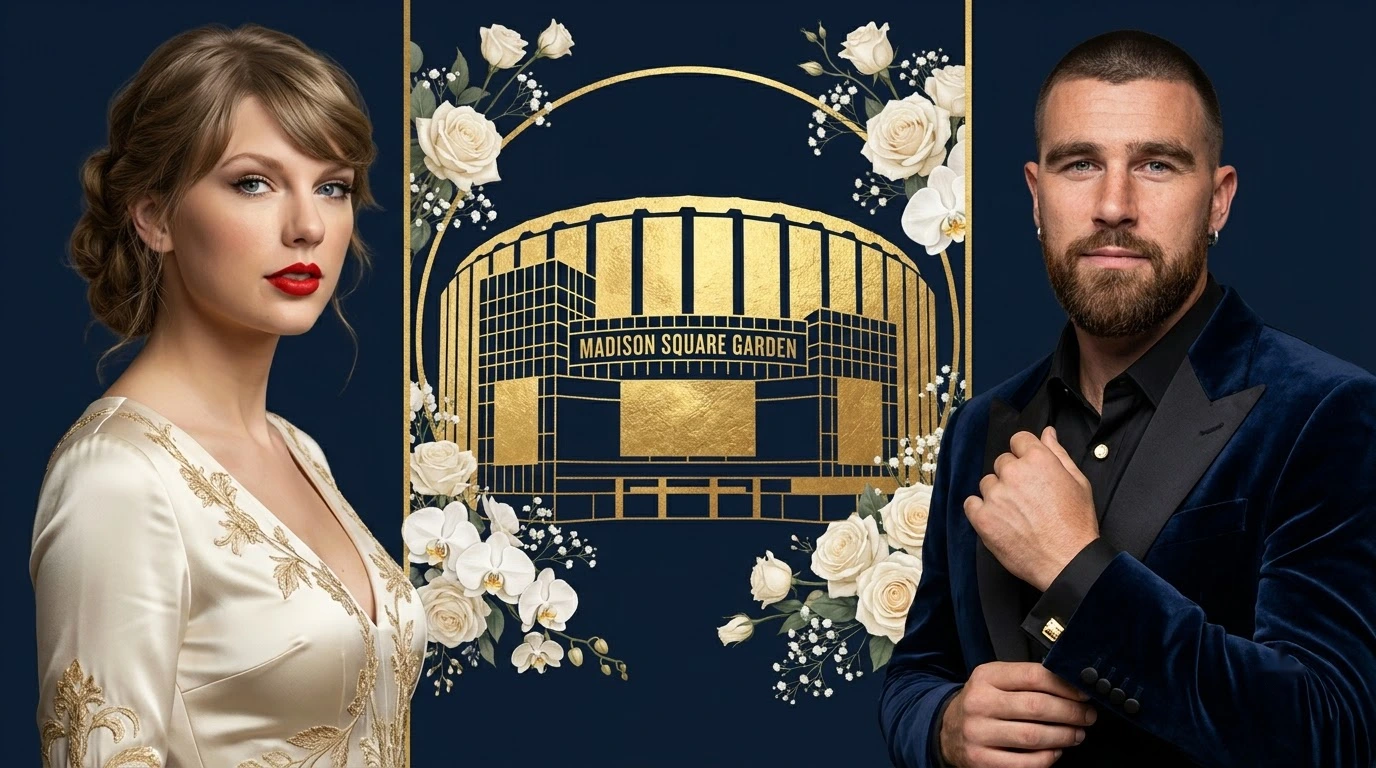
Taylor Swift and Travis Kelce married at Madison Square Garden on July 3, 2026, with Adam Sandler officiating and Stevie Nicks performing, according to the Associated Press report published by NFL.com. The ceremony brought a major sports figure and a major music figure together inside a venue closely associated with both worlds. This article revisits the confirmed wedding report; it is not a new announcement of their marriage.
The same report identified Austin Swift as the man of honor and Jason Kelce as the best man, citing Swift’s publicist, Tree Paine. Outside the venue, a marquee announced that the couple had married. Those details give the event a clear public outline without needing to invent conversations, private vows or moments that were never released.
Why Sandler’s role was the memorable surprise
An officiant has a different role from a guest. The person is part of the ceremony’s structure, which makes the choice more striking than another recognizable face arriving at a celebrity wedding. Sandler’s involvement supplied an unexpected connection between a familiar screen personality and an occasion that had already attracted enormous attention.
That does not give outsiders access to why he was chosen or what he said unless those details are documented. It does explain why the credit is such a strong hook: readers can immediately picture the contrast between his public career and the ceremonial responsibility.
The wedding story therefore works without an invented emotional scene. A verified role can be more compelling than a vague claim that an entire room was stunned or in tears. The concrete fact gives readers something they can understand and discuss while leaving the private experience with the people who attended.
A venue that connects their professional worlds
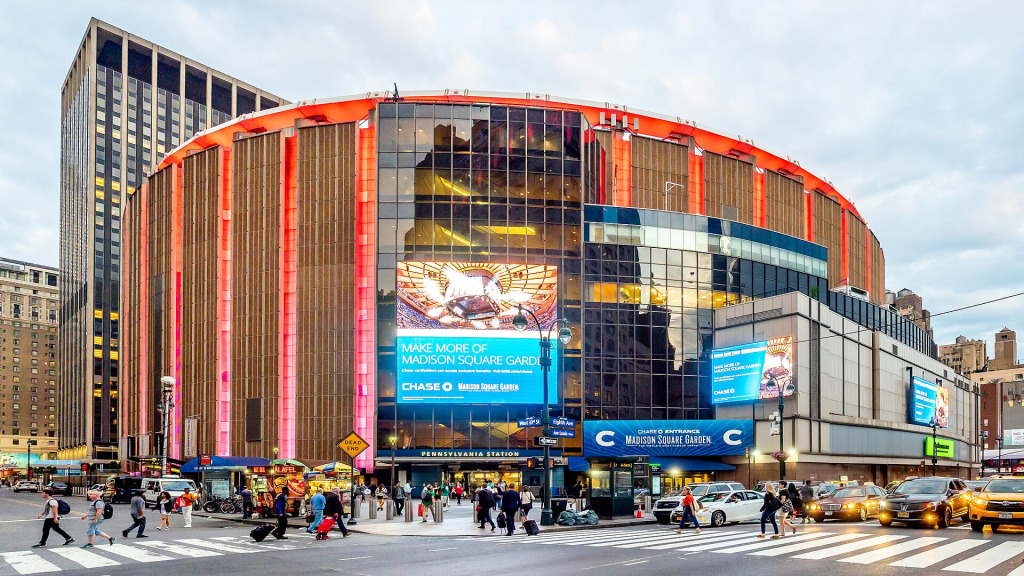
Madison Square Garden is a useful setting for understanding the public symbolism of the marriage. It is associated with live competition and live performance, the two kinds of work that made Kelce and Swift famous. Choosing a venue with those associations makes the location part of the story rather than merely a backdrop.
That is an editorial reading of the setting, not a statement from the couple about its meaning. The distinction matters because large events often inspire confident explanations from people who were not involved in planning them. A setting can have recognizable cultural associations without every interpretation being an official intention.
It also creates an interesting contrast: a place built for an audience hosted an occasion whose most personal parts were not automatically available to that audience. Public fame and a private ceremony can occupy the same building without creating a right to see everything that happened inside.
The family roles made the outline feel personal
The reported roles for Austin and Jason give the wedding coverage a family center. Readers who mainly encounter the couple through professional achievements can see a familiar structure: siblings taking meaningful places beside the people getting married. That detail does not require a large cast list to make sense.
It is also more informative than treating every invited celebrity as equally important to the story. A famous guest may attract a photograph; a sibling’s ceremonial role explains something about the event’s structure. The strongest reporting keeps that difference clear.
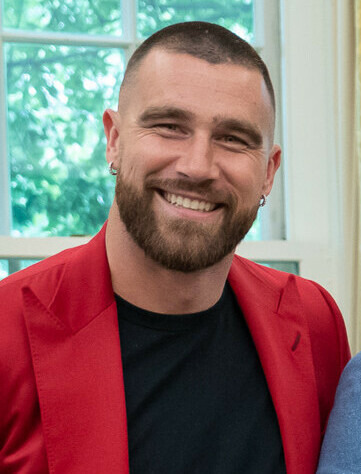
For fans following the relationship over time, Jason’s role has an additional public connection because of “New Heights.” But the wedding role and the podcast role remain separate. A program that shares some family stories is not a complete record of family life.
The reported music adds another layer to the setting. A performance within a ceremony has a different purpose from a public concert: it belongs to an occasion and to the people gathered for it. Knowing who performed can help readers understand the outline without assuming the set list or reproducing an imagined scene.
The same principle applies to photographs outside the building. They can document arrivals, the venue and public interest. They cannot establish everything that happened inside. Keeping those perspectives distinct allows the event to retain both its public significance and its personal scale. The wedding can be a major cultural story while remaining, at its center, a ceremony for the couple and the people they chose to include.
How to read wedding coverage months later
By October, an older wedding photograph or headline can easily return to a feed without its date. A useful first step is to distinguish a July report from a fresh statement, a retrospective or a newly released image. Those are different kinds of updates, even when they concern the same event.
The same care applies to captions promising unseen footage, secret speeches or a major family announcement. A confirmed marriage does not automatically verify every later story attached to it. Readers can check whether a claim leads back to an identifiable report, a named representative or material released by the people involved.
What remains compelling about the confirmed wedding story is already specific: Swift and Kelce, a landmark New York venue, Sandler’s officiating role, Nicks’s performance and siblings beside the couple. Those facts provide a memorable chapter without turning the occasion into an imagined script. The public outline is substantial enough to revisit, while the details that were kept private do not need to be filled in for the story to feel complete.
Photo credits: Taylor Swift at the Golden Globes 2024 (Enhanced, cropped) 1.jpg — iHeartRadioCA, CC BY 3.0; photographed 2024-01-08. Madison Square Garden (MSG) – Full (48124330357).jpg — Ajay Suresh from New York, NY, USA, CC BY 2.0; photographed 2019-06-24. Travis Kelce in the Oval Office of the White House on June 5, 2023 – P20230605AS-0902 (cropped).jpg — Adam Schultz, Public domain; photographed 2023-06-05. Archival photographs illustrate the people and settings discussed; they do not depict every reported event.
_1.jpg)
_-_Full_(48124330357).jpg)
.jpg)