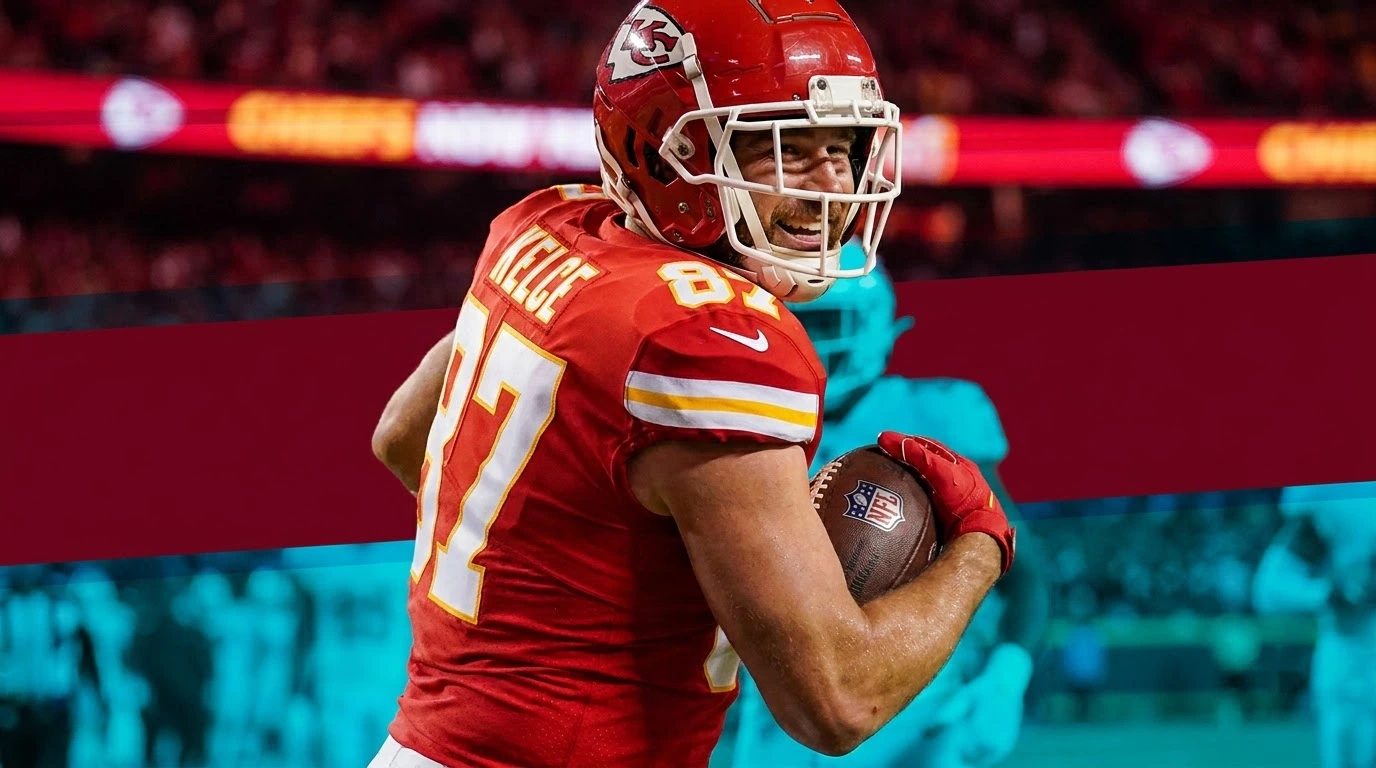
Travis Kelce’s 11-yard touchdown helped Kansas City finish a September 27 win over Miami, but the 24-10 final score compresses the tension that came before it. The Chiefs’ official recap described a one-touchdown game late in the fourth quarter, a crucial defensive stop and then Patrick Mahomes finding Kelce to extend the lead. For fans who arrived through Taylor Swift and are learning the sport, that sequence is an excellent example of why the timing of a touchdown matters.
This is a breakdown of that September game, not a claim about the Chiefs’ latest result. The win moved Kansas City to 3-0 at that point in the season. The key moment was not an isolated celebration clip; it was a connected stretch of defense, field position and offense.
The defensive stop came first
Miami still had a chance to tie when Nohl Williams broke up a fourth-down pass. A fourth-down stop changes possession without a punt, which can give the offense a shorter field than it would receive after a kick. Kansas City then converted the opportunity into the Kelce touchdown.
That order is important. A highlight of the scoring catch naturally centers the quarterback and receiver, but the possession began with another unit doing its job. Football often hides those connections when clips are separated from the drive that produced them.
For a new viewer, tracking possession is one of the quickest ways to understand a close game. Ask where the offense starts, how much time remains and what score would change the situation. Those three details can explain why a short completion creates a much larger reaction than a longer gain earlier in the afternoon.
Why the lead changed the pressure on Miami
A seven-point deficit can be erased by a touchdown and a successful extra point. A fourteen-point deficit generally requires two scoring possessions. Late in a game, that difference changes what the trailing team must accomplish before time runs out.
The clock does not stop being a factor simply because an offense can move the ball. The team still needs opportunities, successful execution and enough remaining time to use them. Extending a lead can therefore be valuable beyond the six points recorded next to the scorer’s name.
That is the tactical significance of the Mahomes-to-Kelce play. Its importance comes from the score and situation, not from a claim that the route was unlike anything the defense had seen. The available recap establishes the outcome; a detailed technical claim about coverage would require closer film evidence.
A familiar target in a high-leverage situation
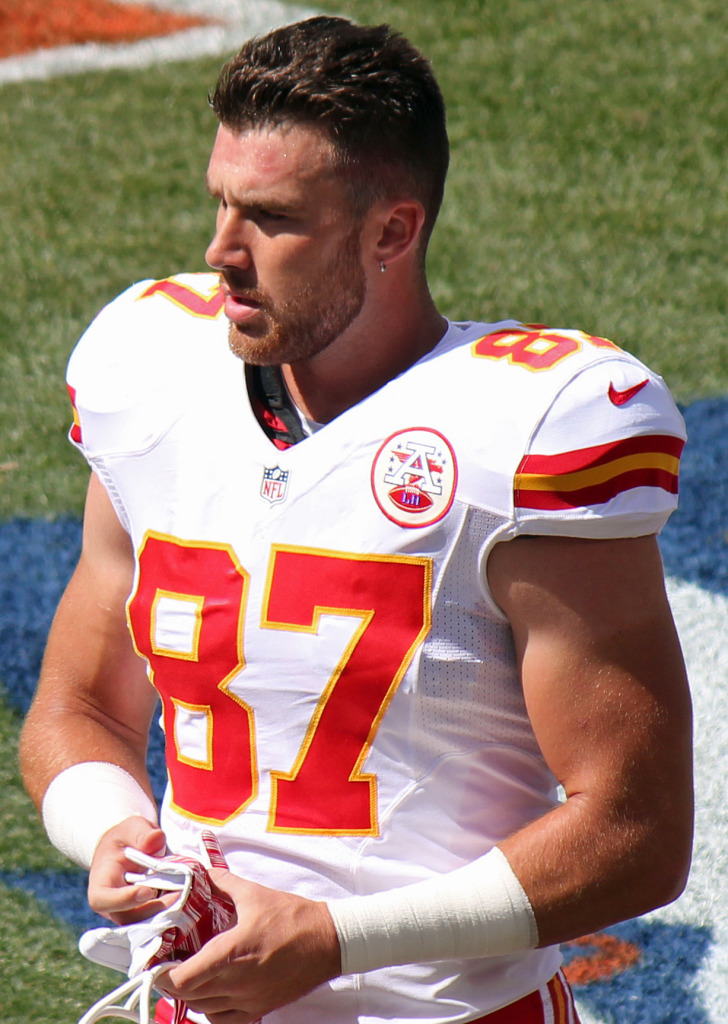
Kelce’s role can be especially interesting to viewers who know him primarily through the couple’s off-field coverage. A receiving tight end operates between categories that are easier to recognize. He may line up near offensive linemen on one play and become a passing target on another.
That flexibility makes the position useful in crowded areas of the field. Defenses must account for the possibility of a block, a short route or movement into open space. The offense’s task is to create a favorable opportunity and complete the play before that space disappears.
The explanation is general football context, rather than a reconstruction of every assignment on this touchdown. It gives newer fans a framework for watching the position without pretending a short written recap reveals the full play call.
The sequence also shows why fourth down deserves special attention. An offense that does not gain the needed distance gives the other team the ball at the point where the play ends. In the late stages of a close game, that can make the next possession unusually consequential.
For someone learning the sport, follow the down-and-distance display before watching the replay. It explains the problem the offense had to solve. Then look at what the result changed for the next team with the ball. This simple habit turns a collection of disconnected highlights into a sequence of decisions and consequences. In this game, the defensive stop and the scoring pass become parts of the same decisive stretch.
The final score can hide the game’s shape
The official report described stretches in which drives produced little scoring after an active opening. That pattern matters because a two-score finish can make a game appear comfortable in retrospect even when the result remained open deep into the fourth quarter.
A useful way to read a box score is to pair it with the scoring timeline. The total tells you who won and by how much. The sequence tells you when control changed. Neither replaces the other, and a single touchdown clip usually leaves out both the buildup and the defensive work around it.
For fans following Swift and Kelce across different kinds of coverage, this is where the sports story becomes more rewarding on its own. The relationship may have supplied an introduction to the player. Understanding game situations supplies a reason to keep watching the football.
The September 27 touchdown is a compact lesson in that process: a close game, a fourth-down stop and a short scoring pass that made Miami’s remaining task much harder. The catch appears as one entry in the record. Its significance comes from everything the scoreboard, the clock and the previous possession had arranged around it.
Photo credits: Cole Holcomb chasing Travis Kelce OCT2021.jpg — All-Pro Reels, CC BY-SA 2.0; photographed 2021-10-17. Travis Kelce.JPG — Jeffrey Beall, CC BY 3.0; photographed 2014-09-14. Aerial view of Arrowhead Stadium 08-31-2013.jpg — Ichabod, CC BY-SA 3.0; photographed 2013-08-31. Archival photographs illustrate the people and settings discussed; they do not depict every reported event.


