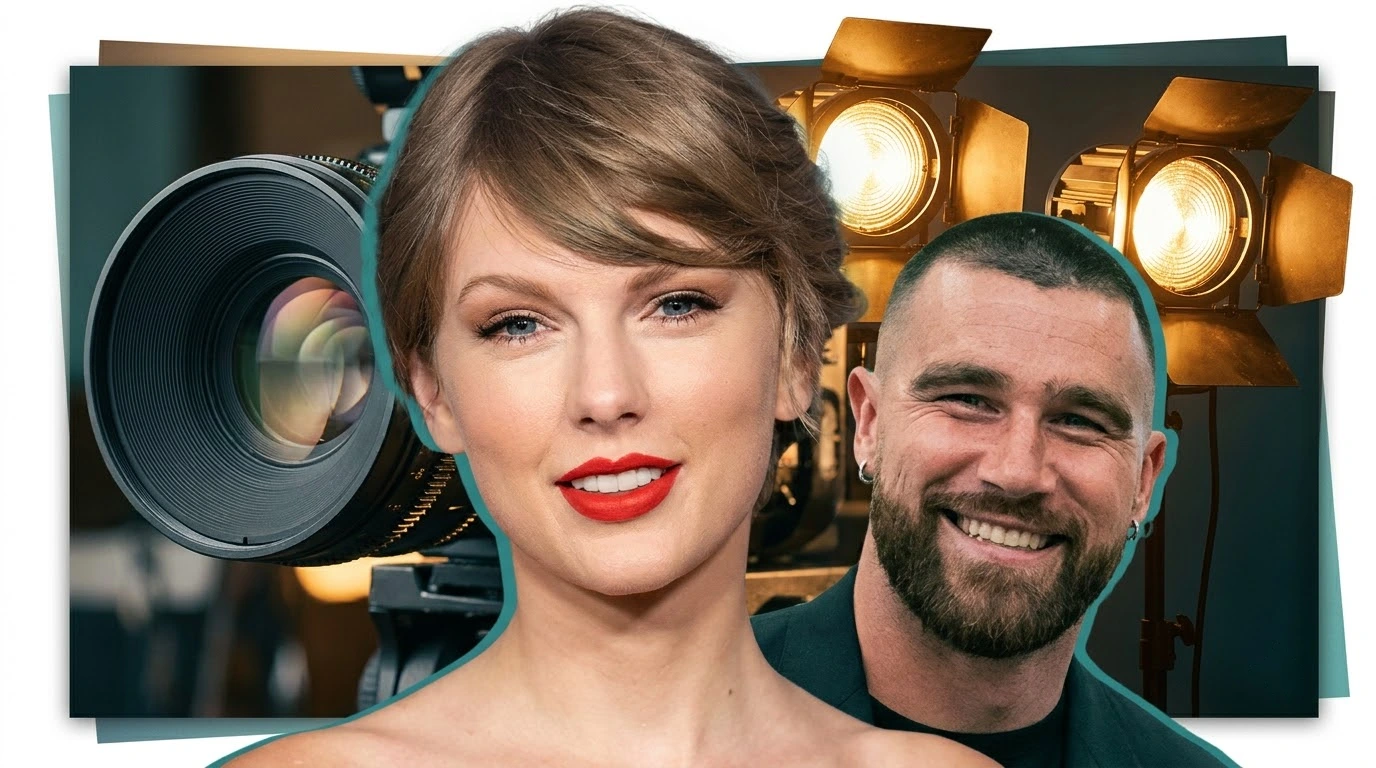
Taylor Swift’s latest behind-the-scenes release offers something the finished “Patient Zero” video was never designed to show: a glimpse of the people around her while she works. Footage shared through Spotify on October 13 includes Travis Kelce beside his wife on the Los Angeles set, according to Us Weekly’s report on the release. The NFL star appears behind Swift during a moment with Dakota Johnson. It is a small addition to a much larger production, but it gives viewers a different entry point into the project.
The distinction matters. Kelce’s presence in production footage is different from an acting credit or an appearance in the completed narrative. The new material shows support around the work. It does not establish that he plays a character in the official video. For readers arriving through a short clip, that is the key detail to keep straight before the moment becomes a much bigger claim.
The supporting role that happens between takes
In a music video, almost everything viewers see has been selected to serve a story. Behind-the-scenes material changes the frame: conversations, pauses and interactions become part of the experience. A partner standing nearby can suddenly become the detail audiences notice first, even when the production itself involves actors, cameras, lighting crews and a carefully planned visual concept.
That is the appeal of this release. It offers a familiar relationship inside an unfamiliar professional setting. Football viewers usually encounter Kelce in a stadium or on a podcast. Music fans usually encounter Swift as the performer at the center of a finished image. Seeing those worlds meet around a working set gives both audiences something recognizable without needing a dramatic announcement.
A short clip inside a much larger film project

“Patient Zero” premiered during the September 27 MTV Video Music Awards. A CBS and MTV announcement identified Swift as director, Colin Farrell and Johnson as stars, and Emmanuel Lubezki as cinematographer. Those credits explain why the backstage release is interesting beyond the couple: this is also a look around a substantial visual production.
The camera language of the finished film and the casual language of backstage footage serve different purposes. One invites viewers into a fictional world; the other reminds them that people built that world together. Watching both can make the finished video more rewarding, because performance choices and production decisions stop looking like things that simply appeared on a screen.
Why this moment works without a big reveal
The simplest reading is also the most useful: Kelce visited a project Swift was making, and the released footage includes him. There is no need to assign a hidden message to every gesture for that to be engaging. A brief, relaxed interaction has a different texture from an award-show arrival or a posed photograph, even though the public is still seeing an edited selection.
For fans, the appeal can be the change in perspective. Instead of watching a partner react from a stadium suite or concert audience, they see him near the process itself. That makes the work feel less distant. It also creates a natural reason to return to the complete video and look at what the filmmakers were trying to accomplish.
This is an editorial interpretation of the clip’s appeal, rather than a claim about either person’s private thoughts. A few seconds of footage cannot explain an entire relationship. What they can do is add a concrete, observable moment to the public record of two demanding careers running alongside each other.
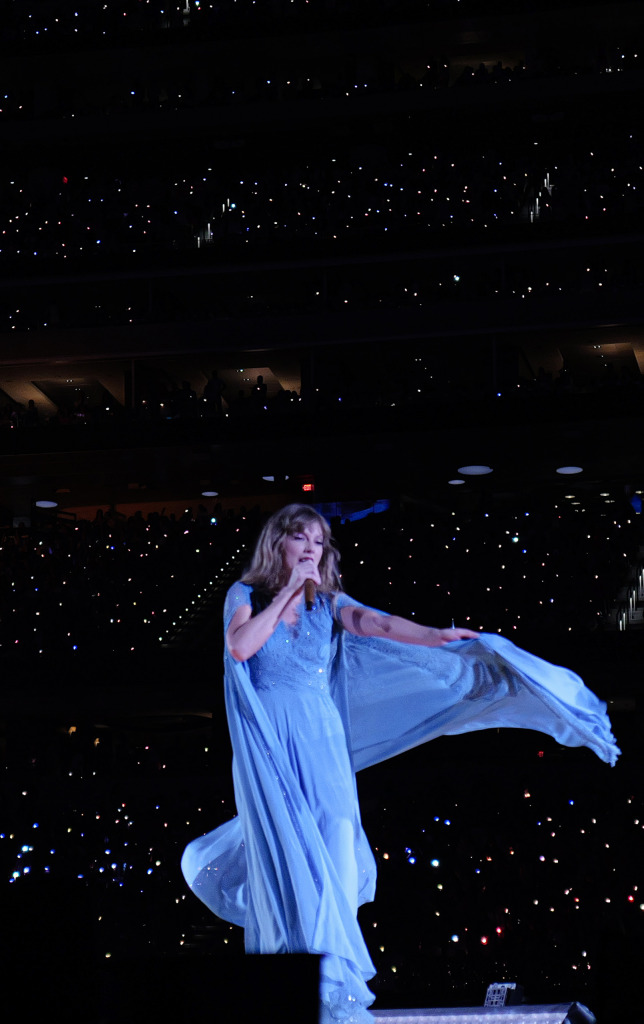
One useful detail to notice is who controls the focus of a scene. In a finished video, the framing tells the audience which person or object matters. In backstage footage, attention can drift toward someone who is not part of the planned shot. That difference explains how a supporting presence becomes the main subject of a social clip.
It also gives viewers a practical reason to compare versions. Look at the setting around the interaction, then find the corresponding environment in the completed film. The comparison can reveal how much lighting, framing and editing change the impression of a place. The backstage moment becomes more than a relationship update: it becomes a small lesson in how an image is made.
What to watch when you open the full release
Start by identifying which version you are watching. A music video, an expanded edition and a platform’s backstage reel may contain different material. A social post that combines those versions can make it appear that an interaction belongs to the finished song narrative when it actually took place between takes. The original upload and its description provide the clearest context.
Then watch for the production rather than only the celebrity cameo. Notice how performers reset, how the atmosphere changes between the staged scene and the pause afterward, and how a brief human interaction sits beside a highly controlled image. Those differences are part of what makes backstage material worth watching in the first place.
The October release does not need to be inflated into a secret announcement to hold attention. It gives fans a current, specific reason to revisit “Patient Zero,” while offering a modest view of Kelce showing up in Swift’s professional world. The quiet moment is the story: a recognizable couple, a working film set, and a few seconds that look different when the camera is no longer serving the finished fiction.
Photo credits: Taylor Swift at the 2023 MTV Video Music Awards (3).png — iHeartRadioCA, CC BY 3.0; photographed 2023-09-13. Travis Kelce 2021.jpg — Erik Drost, CC BY 2.0; photographed 2021-06-12. Taylor Swift Eras 08092023-573.jpg — Paolo V, CC BY 2.0; photographed 2023-08-09. Archival photographs illustrate the people and settings discussed; they do not depict every reported event.
.png)

