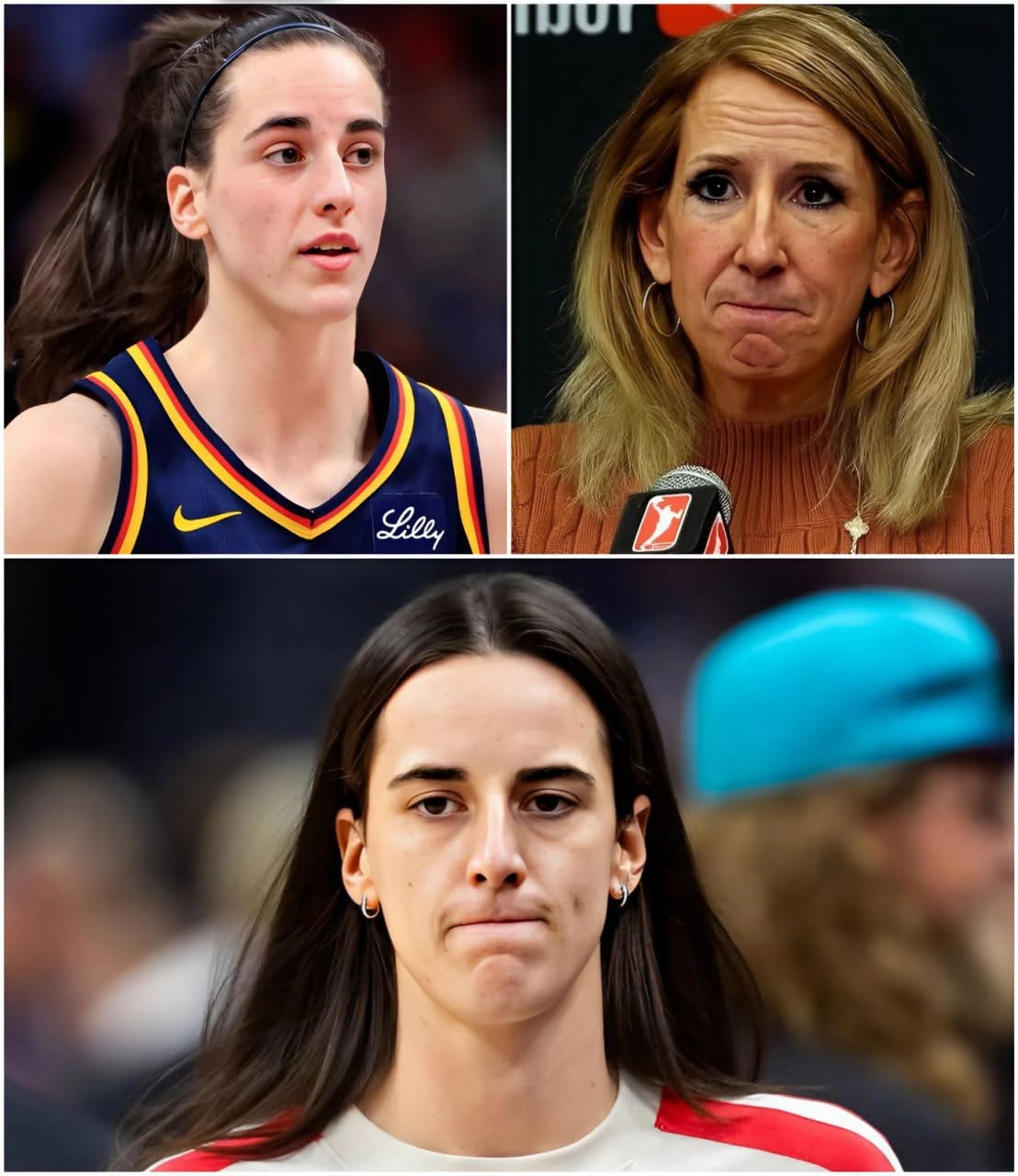
“SHE SAT OUT — AND THE WHOLE SYSTEM SHOOK.”
When Caitlin Clark was sidelined with an injury, many people assumed the consequences would be simple.
A few missed games.
A temporary lineup adjustment.
A disappointed crowd waiting for its superstar to return.
But the real conversation quickly became much bigger.
Because Clark isn’t simply another player on an injury report.
She has become one of the most powerful commercial attractions in women’s basketball.
And whenever she doesn’t play, everyone starts watching the numbers.
Ticket prices.
Attendance.
Television audiences.
Advertising value.
Merchandise.
Suddenly, an injury isn’t only a basketball story.
It becomes a business story.
That’s the reality behind the dramatic viral claim that Clark’s absence created “the most expensive six days in WNBA history.”
There is no reliable evidence establishing that exact description as an official financial calculation.
Nor is there verified evidence that television networks secretly removed advertisements during games, that camera operators were instructed to hide empty seats, or that PR agencies collectively froze campaigns because Clark wasn’t playing.
Those details make an extraordinary story.
But they shouldn’t be confused with documented facts.
The documented numbers are already striking enough.
During an earlier Clark injury absence, the secondary ticket market for a Fever game against Chicago reacted dramatically after news emerged that she wouldn’t play.
According to reporting cited by Sports Business Journal, average resale prices dropped approximately 70% within 48 hours of the injury announcement.
That’s not speculation.
That’s economics.
People weren’t simply purchasing a basketball game.
Many were purchasing the opportunity to watch Caitlin Clark.
And that distinction has changed how opponents think about Indiana Fever games.
Since Clark entered the WNBA, teams have repeatedly recognized that hosting Indiana can generate extraordinary demand.
Bigger arenas.
Opened upper decks.
More expensive secondary-market tickets.
National television windows.
More media attention.
More people watching.
More businesses wanting exposure.
Clark arrived in professional basketball carrying an audience developed during her historic college career.
Instead of disappearing when she entered the WNBA, much of that attention followed her.
That created something incredibly valuable:
appointment viewing.
People who previously hadn’t planned their evenings around a WNBA game suddenly knew when Indiana was playing.
Families bought tickets.
Young girls arrived wearing Clark jerseys.
Opposing fans wanted to see her shoot from the logo.
Casual sports viewers tuned in because everyone else seemed to be talking about her.
That creates an economic ripple effect far beyond one player’s salary.
Ticket sellers feel it.
Arena operators feel it.
Television partners feel it.
Sponsors feel it.
Opposing franchises feel it.
Even surrounding businesses can benefit when a major sporting event attracts larger crowds.
So when Clark sits out, the obvious question becomes:
How much of that demand disappears with her?
The answer isn’t as simple as viral posts sometimes suggest.
Yes, there is evidence that her absence can affect ticket demand.
Clark herself has acknowledged feeling responsibility because people spend significant time and money hoping to watch her play.
But something else has happened too.
The Fever have demonstrated that they can still attract major television audiences without her.
During the 2026 season, for example, Indiana games without Clark still produced impressive national viewership.
That matters.
It suggests the phenomenon may be evolving.
Clark helped bring enormous numbers of new eyes toward Indiana and the WNBA.
But once those viewers arrive, some remain interested in the team, its opponents and the league itself.
That’s exactly what sustainable growth should look like.
A superstar opens the door.
Then the sport has to convince people to stay.
Still, nobody should underestimate Clark’s individual drawing power.
In 2024, games featuring Indiana and Clark generated the seven most valuable WNBA broadcasts for participating brands, according to data reported by Sports Business Journal.
Those games accounted for a remarkable share of the league’s overall broadcast sponsorship value.
Think about what that means.
Every Clark three-pointer wasn’t merely a basketball highlight.
Behind the broadcast were companies paying for visibility.
Logos appearing on screens.
Commercial inventory.
Social-media clips.
Sponsored content.
Merchandise opportunities.
That’s the ecosystem surrounding modern professional sports.
And Clark rapidly became one of its most important engines in women’s basketball.
So imagine being an executive when an injury update arrives.
The basketball department thinks about rotations.
The coaching staff thinks about offense.
The medical team thinks about recovery.
But somewhere else, people are looking at spreadsheets.
Ticket projections.
Audience estimates.
Advertising inventory.
Merchandise demand.
Engagement forecasts.
That doesn’t mean executives were literally panicking behind closed doors.
It means superstar availability has measurable commercial consequences.
Michael Jordan had it.
Tiger Woods had it.
Serena Williams had it.
LeBron James has it.
Certain athletes become events themselves.
Clark is increasingly operating within that category.
And perhaps the most revealing moment isn’t what happens when she leaves.
It’s what happens when she returns.
Suddenly the promotional machinery accelerates again.
Fans want tickets.
Television audiences want the comeback.
Social media fills with warmup footage.
Every shot becomes content.
Every possession becomes a potential highlight.
The anticipation itself becomes valuable.
But there’s another side to this conversation that shouldn’t disappear beneath dollar signs.
Clark is still an athlete.
An injured player shouldn’t be rushed back because ticket prices changed.
She shouldn’t be responsible for protecting television ratings.
She shouldn’t have to play hurt because someone purchased expensive courtside seats months earlier.
The responsibility of the team must remain straightforward:
Protect the player first.
Because the most valuable version of Caitlin Clark isn’t the one who returns six days earlier.
It’s the one who can remain healthy enough to compete for years.
That’s the tension underneath this entire story.
Clark has become commercially important enough that her absence can move markets.
But that commercial importance makes protecting her even more important.
And perhaps that’s the real story behind the dramatic phrase “the most expensive six days in WNBA history.”
Not a secret advertising conspiracy.
Not television cameras desperately hiding empty seats.
Not executives staring silently at collapsing spreadsheets.
Something simpler.
The sports industry discovered that one young basketball player could materially change consumer behavior.
When she plays, people notice.
When she doesn’t, people notice that too.
And when she walks back onto the floor?
The reaction tells you everything.
Caitlin Clark isn’t just influencing what happens on the court.
She’s helping redefine what women’s basketball can be worth off it. 🏀🔥
#CaitlinClark #IndianaFever #WNBA #Fever #CaitlinClarkFans #WNBANews #WomensBasketball #Basketball #SportsBusiness #FeverFans