
The headline promises a dramatic Michael Jordan intervention, but the available reporting does not establish that such an intervention happened. Searches located videos carrying similar claims, yet no reliable source reviewed here confirmed that Jordan publicly attacked Kara Lawson, accused her of sabotaging a FIBA contest, or threatened to dismiss the American coaching staff. There is also no
verified five-word Jordan statement to reproduce. The genuine sporting issue concerns Caitlin Clark’s role and the decisions governing it.
That distinction changes the direction of the story. A dispute over a starting lineup can be examined through player production, substitutions, and the coach’s explanation. An allegation of deliberate sabotage requires evidence of intent. A claim that Jordan issued an ultimatum requires a traceable statement. Neither accusation becomes established simply because it appears beside footage of Clark on
the bench. The reporting available supports a selection debate, with significant questions about responsibility during the most consequential possessions.

One particularly useful detail challenges the impression that Clark has barely participated. In a September 9 analysis, Robin Lundberg of Sports Illustrated’s Fever coverage reported that she led the American team in total minutes and average playing time through the group stage. Her reported average was 21.9 minutes, ahead of Breanna Stewart’s 20.3. The same article credited Clark
with a team-leading 6.3 assists per contest. Starting on the bench therefore did not mean receiving the smallest role.
Those numbers deserve prominent placement because they alter the central question. If a player leads her team in minutes, criticism should specify which minutes or responsibilities remain insufficient. Is the concern her absence from the opening possessions, the combinations surrounding her, or her involvement when the score is tight? Each possibility calls for a different assessment. Treating them as interchangeable
makes it harder to identify whether the coaching decision is flawed and what an effective adjustment would actually accomplish.
Lawson’s public position has been comparatively straightforward. Reporting from the September 9 press conference indicated that she was satisfied with the existing opening group before the quarterfinal against Hungary. The Spun quoted her saying, “I like where we are right now.” The surrounding remarks allowed for rotation changes between contests while expressing confidence in the starts her
preferred group had produced. That is an explanation observers can challenge without attributing an unverified motive to the coach.
The strongest challenge concerns the relationship between continuity and adaptation. Keeping the same starters can preserve familiar assignments and reduce uncertainty. It can also become a limitation if a recurring problem persists and alternative combinations offer credible solutions. The distinction depends on what happens across possessions. Stability is valuable when it supports effective execution; it deserves reassessment when it protects
an arrangement whose practical benefits are no longer apparent. Neither conclusion can be reached from the lineup announcement alone.
The more consequential complication concerns how close contests finish. Lundberg’s report noted that Clark was not part of the decisive closing stretch against Italy, when Lawson relied mostly on starters. It also noted that Aliyah Boston, another reserve, did participate in those minutes. That detail separates starting status from closing responsibility. It offers a specific basis for
discussing Clark’s deployment without suggesting that every player who begins on the bench is excluded from important decisions later.
An opening lineup determines how a team begins its work. A closing lineup reveals which combination the coach trusts under the particular conditions of the final stretch. Those groups can overlap, but they serve different purposes. An opponent may change coverage, a player may encounter foul trouble, or a productive combination may emerge during the contest. The relevant coaching skill
is recognizing those developments and choosing the group best equipped to respond, rather than following an announcement made earlier.
For Clark’s supporters, the productive argument is consequently more precise than a demand that she simply start. They can ask whether her passing should feature more heavily when the offense needs a dependable opportunity. They can examine whether the team generates better movement with her handling the ball. They can assess whether leaving her outside the closing group removes an
option the defense would otherwise need to respect. These are basketball propositions that footage and possession data can help evaluate.
There is also a legitimate counterargument to examine. A coach may prefer another combination because of a particular defensive assignment, ball-security concern, or matchup. That reasoning should be assessed against the circumstances rather than dismissed automatically. However, a general appeal to experience is not a complete explanation. The chosen group still needs to execute the required tasks. If it repeatedly
struggles to create useful shots or cover the opponent’s actions, its familiarity alone cannot establish that it remains preferable.
Clark’s tournament production has not been uniform. A September 8 report carried by AOL credited her with nine points and seven assists against Czechia, after a one-point outing against Italy. It described her three-point shooting against Czechia as one make from six attempts. The variation provides relevant context for assessing her scoring. It also explains why an account built
only around highlight plays or only around missed shots would leave readers with an incomplete understanding of her contribution.
Shot selection and shot outcome should be separated when considering those performances. A clean opportunity created within the offense can be worthwhile even when it misses. A contested attempt can fall without becoming a reliable foundation for future possessions. The evaluation should therefore consider the quality of the opportunity, the alternatives available, and the time remaining. A small collection of
makes or misses offers information, but it cannot independently settle whether a player should organize the next important attack.
Lawson’s reported response to Clark’s shooting also belongs in the account. In that September 8 coverage, she defended the quality of Clark’s attempts, described fluctuations as normal for shooters, and emphasized her playmaking contribution. The report also referred to Clark’s 11 assists without a turnover against China. Those comments do not prove that every substitution was optimal. They do provide
relevant public evidence against presenting the coach’s attitude as uniformly hostile or reducing the relationship to an unsupported jealousy narrative.
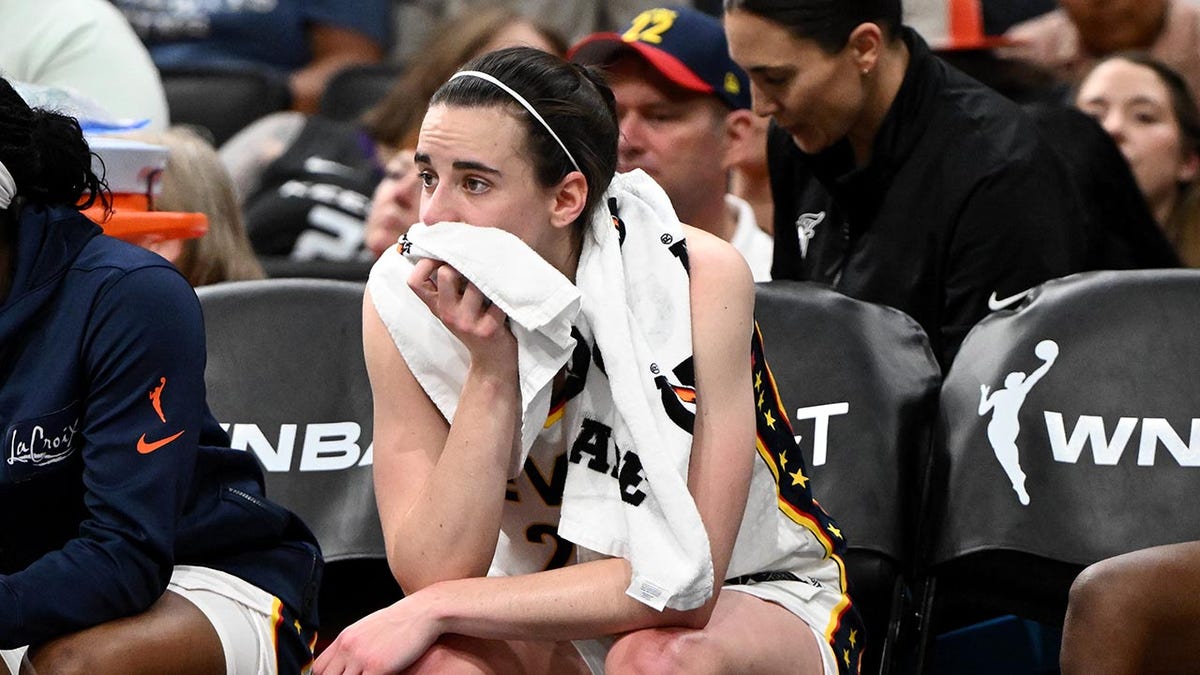
A reasonable analytical inference is that the disagreement centers on deployment rather than an absence of recognized ability. That interpretation should remain distinct from any claim about private conversations. The staff may value a player highly while assigning her a role supporters consider too limited in certain situations. Conversely, public praise does not exempt the staff from explaining important choices.
Both observations allow serious scrutiny without pretending to know what Lawson or Clark thinks beyond their documented words and actions.
The initial headline introduces Jordan as someone capable of forcing an immediate organizational response. The official background reviewed here does not establish that premise. FIBA’s account of Lawson’s appointment described a USA Basketball coaching commitment through 2028 and identified support from managing director Sue Bird and chief executive Jim Tooley. It did not identify Jordan as the decision-maker over
the women’s coaching staff. That appointment report is background, rather than a fresh guarantee about anyone’s current job security.
A prominent basketball figure’s opinion and an organization’s employment decision are separate matters. Even if a verified Jordan criticism subsequently emerged, readers would still need to know exactly what he said, whom he addressed, and whether anyone with decision-making responsibility responded. A demand for change would not itself establish that a dismissal was authorized. Here, the prior step remains unresolved: the
purported intervention has not been substantiated. There is consequently no factual basis for inventing its wording or describing its consequences.
The accusation that a matchup was intentionally sabotaged presents a separate evidentiary problem. A disputed substitution may be unsuccessful, overly cautious, or poorly timed without being designed to cause defeat. To move from tactical criticism to an allegation of deliberate misconduct, a report would need evidence that establishes that intent. None was located in the material reviewed for this article.
The available record allows scrutiny of the choices themselves; it does not establish the malicious purpose asserted in the caption.
The narrow Italy result supplies a legitimate reason to examine execution. The Spun reported that the United States won 55–52, contrasting that margin with larger victories against China and Czechia. A favorite surviving a close contest should expect questions about how it handled pressure. At the same time, the result does not reveal what would have happened under every alternative rotation.
Any proposed solution needs a basketball explanation, rather than an assumption that the preferred substitution would certainly have produced victory.
The useful review begins with the possessions where the offense stalled. Was the first action defended effectively, leaving no second option? Did the ball remain on one side of the floor? Were players available in positions where they could threaten the defense? These are examples of what an analyst should investigate, not findings established here through a complete film
review. Their purpose is to connect lineup criticism to an identifiable problem and a plausible mechanism for improving it.
A similar review should consider what an alternative lineup might concede. Additional creation could improve the attack while changing defensive assignments or rebounding responsibilities. A combination with multiple ball handlers might require clearer decisions about who initiates and who moves away from the ball. There is no need to assume these adjustments would fail. There is equally no reason to
treat them as automatic. Their effectiveness would depend on preparation, communication, and how the opposing team responds to the change.
The broader roster context adds to the complexity. Reuters reported before the tournament that A’ja Wilson had withdrawn for health reasons and Kelsey Plum was also unavailable after injury difficulties. Its preview identified Stewart, Kahleah Copper, Clark, and Paige Bueckers among the remaining American options. That reporting describes a team managing significant absences while retaining considerable talent. It supports examining
how responsibilities are redistributed, but does not establish that one player should be responsible for replacing every missing contribution.
When personnel changes, a coach may need to redistribute several functions at once. One player can take more responsibility for initiating attacks, another for finishing, and another for organizing defensive coverage. The appropriate combination depends on how those functions fit together. For Clark, a meaningful assessment would examine whether her assignment uses the qualities the lineup most needs. Simply increasing
her minutes would not answer that question if the additional possessions placed her in a role that offered limited influence.
This is also where the statistical argument needs discipline. Assists can document completed passes leading directly to baskets, but a team’s decision-making involves more than that final connection. The pass that creates the advantage may occur earlier. A player can occupy a defender without touching the ball. Those contributions matter when they are observable. They should not become
imaginary credits awarded to defend a favorite player or an established starter when the measurable evidence raises uncomfortable questions.
Communication can improve the debate without resolving every disagreement. Lawson could explain the qualities she wants from an opening group, the circumstances that might change a closing unit, and how she evaluates combinations. Those explanations would give reporters and supporters a clearer framework. They would not require disclosing every tactical detail or making promises about future minutes. The benefit
would be accountability: subsequent decisions could be compared with stated priorities instead of interpreted through speculation about personal resentment.
Clark’s own position should likewise be represented through verified remarks. Fan frustration cannot substitute for her voice, and a bench reaction cannot reliably reveal a complete private opinion. She could disagree with a decision without staging a public confrontation. She could accept an assignment while wanting greater responsibility. Without attributable comments, neither possibility should be presented as established. The reporting examined
here supports discussion of her role; it does not supply the dramatic confrontation or outside rescue described in the headline.
For the next competitive test, the most useful observations concern the timing and purpose of changes. Watch which problem prompts the first adjustment and whether the replacement group addresses it. Notice whether a productive combination receives continued opportunities. Examine how the staff responds when the opponent changes its approach. These observations can reveal flexibility or a failure to adapt more
clearly than a broad accusation. They also give credit where adjustments work, which is essential to a fair assessment.
The closing stretch deserves particular attention if the margin remains narrow. Who initiates the offense after a timeout, who receives the ball when the first option is denied, and who handles the most difficult defensive assignment? Those responsibilities reveal trust in ways the starting designation cannot. A convincing assessment should connect the selected personnel to the task required at that
moment. It should also acknowledge that an effective decision can still produce an unfavorable outcome on an individual possession.
The immediate reporting priorities are therefore concrete. Establish the actual lineup and substitutions, distinguish group-stage evidence from any later result, and collect the participants’ attributable explanations. If an authentic Jordan statement becomes available, examine its original context before attaching it to the rotation dispute. Until that happens, the verifiable tension lies within basketball decisions: how the American team balances established
combinations with the options Clark offers, and whether its most important possessions make effective use of the talent available.