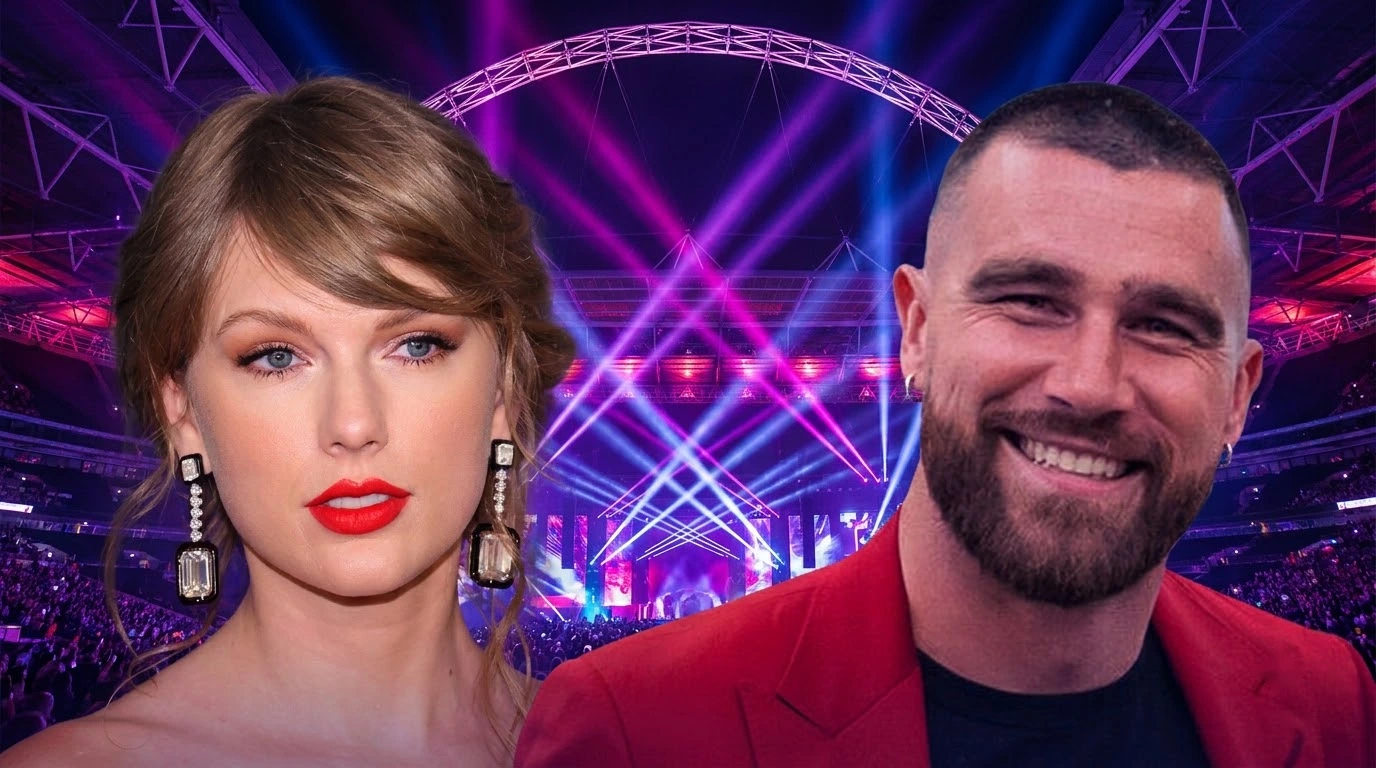
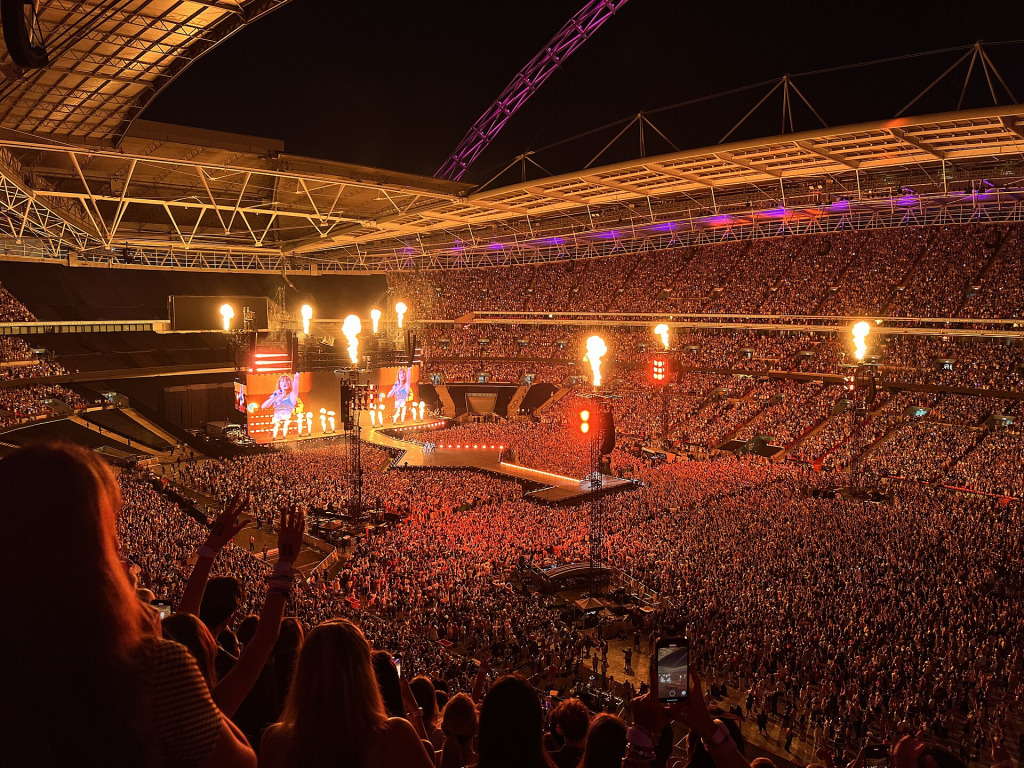
Travis Kelce moved from the audience into Taylor Swift’s performance at Wembley Stadium on June 23, 2024, appearing during the introduction to “I Can Do It With a Broken Heart.” Contemporary TheWrap coverage documented the London appearance. The visual surprise was immediate: the Chiefs tight end was participating in a theatrical transition inside one of the most closely watched concert tours in the world.
This is a look back at that 2024 performance, not a report that the Eras Tour has resumed. The distinction matters when the same short clip reappears months or years later. The cameo belongs to a specific night and a specific part of the show, even though its appeal has outlasted the original news cycle.
A cameo has to fit inside the existing performance
A surprise guest can easily interrupt a show if the moment exists only to announce the guest. Here, the appearance happened within a theatrical segment. That gave Kelce a defined role in the performance rather than asking the concert to stop and become an interview or a relationship update.
The difference is important to how the moment works on video. A viewer can understand that a scene is happening even before recognizing the person involved. Recognition adds another layer, but the stage action still belongs to the larger transition into the song.
It also helps explain why timing and simple physical tasks matter. A guest does not need to sing the lead vocal to contribute to a musical event. Entering at the right point, responding to the performers around him and leaving space for the next beat can be the job.
Kelce later described how the idea developed
In Good Morning America’s July 2024 account of his podcast remarks, Kelce said he had raised the idea of joining the show and that Swift found a suitable place for him. That later explanation gives the surprise a practical dimension: an entertaining idea still had to become something that fit the production.
This is where the professional crossover becomes more interesting than a celebrity sighting. A football player can be comfortable with a stadium audience and still be entering a different craft. The concert has its own cues, movement patterns and expectations. Familiarity with attention is useful, but it is not the same as knowing the show.
The result therefore can be appreciated as a piece of staging. The public relationship helped make the guest instantly recognizable; the performance structure gave him something specific to do once he was there.
Sports confidence and stage confidence are related, but different
Both sports and live performance require action under observation. An athlete responds to teammates and opponents; a stage performer responds to cues, collaborators and the music. Both settings reward preparation, but the definition of success is different.
That makes a cameo an interesting change of role. Kelce was no longer competing for an outcome on the scoreboard. He was helping deliver an expected sequence to an audience that largely did not know he would be part of it. The surprise belonged to the spectators; the execution still required coordination.

For viewers, recognizing that difference makes the clip more rewarding. The pleasure is not only that a famous partner appeared. It is that he entered an established production and accepted a role within someone else’s professional world.
A well-integrated surprise also has an ending. The guest cannot remain the center of attention indefinitely without changing the shape of the concert. The production needs a way to return the audience to the next song, the next cue and the performer they came to see.
That is another useful detail to watch in the complete sequence. Notice how the scene moves forward after recognition has done its work. The cameo creates a burst of attention, but the show has to absorb that energy and continue. Thinking about the exit as well as the entrance makes the moment more interesting as performance. It reveals a small but essential principle of live staging: a surprise works best when it belongs to what comes before and what follows.
Why the moment still works outside the original concert
A strong live surprise can survive in a short clip because it has a clear visual premise. Here, the familiar football figure appears in an unfamiliar costume and setting. The contrast is understandable even to someone who has not watched the complete tour film or followed every appearance the couple made.
The longer performance still adds context. It shows the segment’s tone and how the cameo connects to what comes next. That is the difference between enjoying a recognizable image and understanding why it belongs at that point in the show.
Seen from October 2026, the Wembley appearance is a distinct chapter in the couple’s public history. Swift’s world did not merely provide a backdrop for Kelce; the show briefly gave him a task. The enduring hook is the switch in roles: a stadium athlete stepping into a carefully arranged concert scene, while the performer who usually held the spotlight guided the moment back into the music.
Photo credits: Taylor Swift The Eras Tour Fearless Set Era (53108834197) (cropped).jpg — Paolo Villanueva, CC BY 2.0; photographed 2023-08-09. Taylor Swift Eras Tour London 20240819 1989era.jpg — BrigidLIS, CC BY 4.0; photographed 2024-08-19. Travis Kelce 2021.jpg — Erik Drost, CC BY 2.0; photographed 2021-06-12. Archival photographs illustrate the people and settings discussed; they do not depict every reported event.
_(cropped).jpg)

