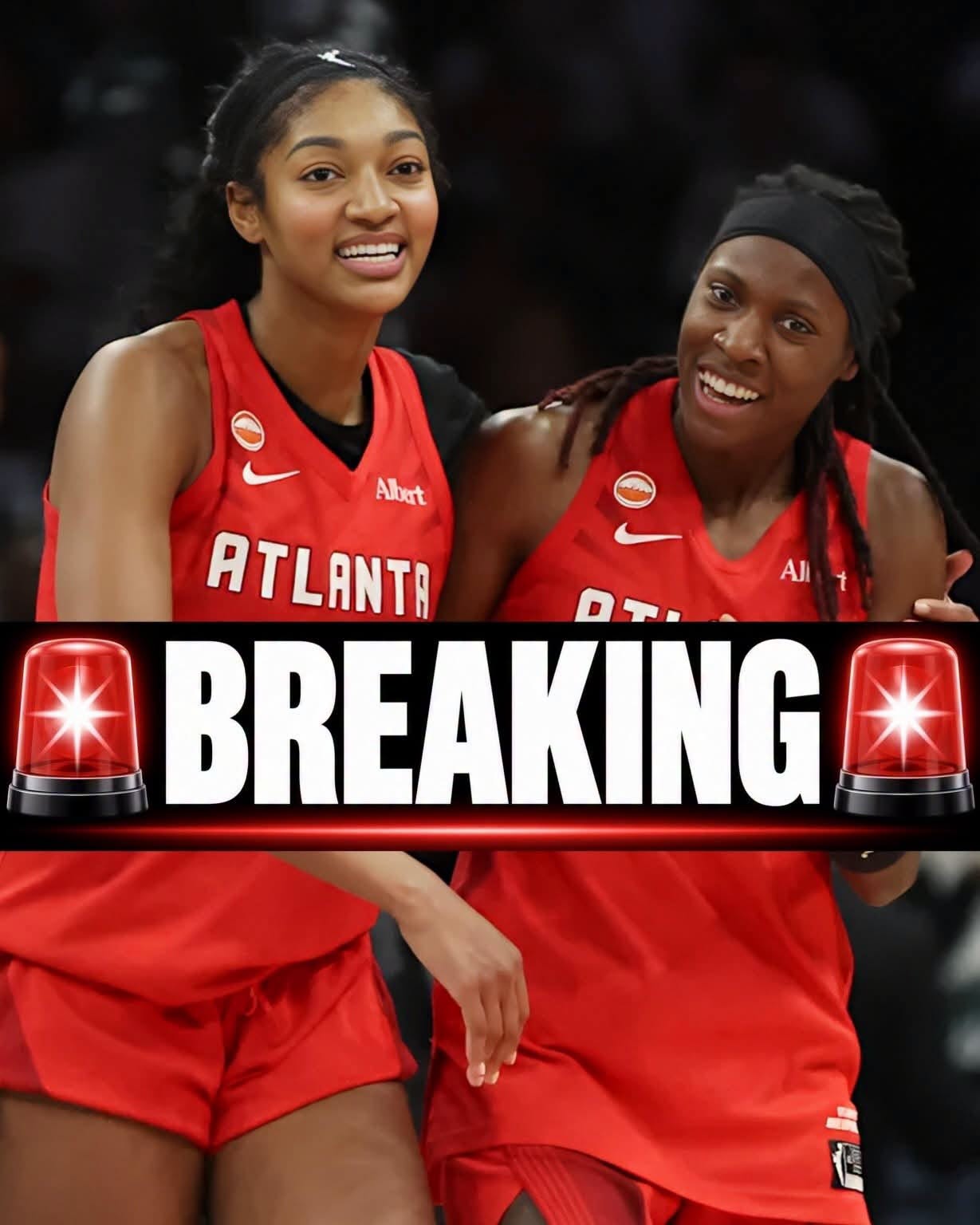
🚨🇺🇸 BREAKING: CALLS GROW FOR ANGEL REESE & RHYNE HOWARD TO BE LEFT OFF THE 2028 OLYMPIC TEAM AFTER NATIONAL ANTHEM CONTROVERSY — BUT SHOULD THIS REALLY DETERMINE WHO REPRESENTS AMERICA? 🏀🔥
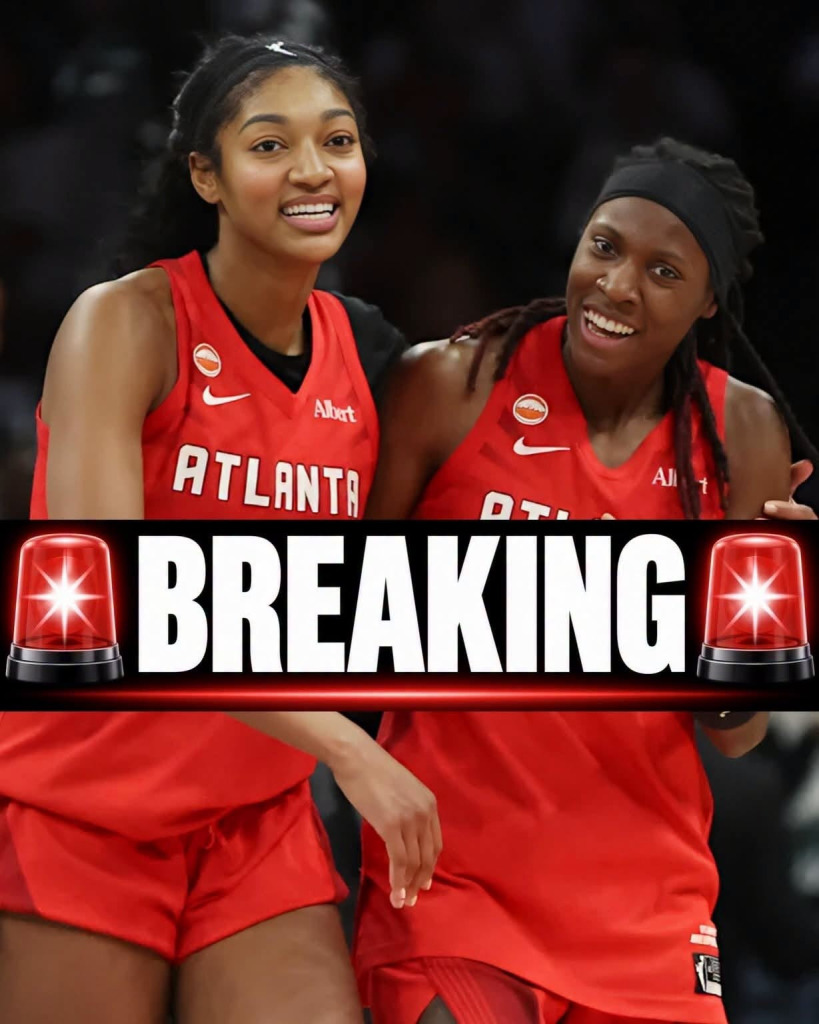
Angel Reese and Rhyne Howard have suddenly found themselves at the center of a debate much bigger than basketball.
As the Atlanta Dream competed against the Golden State Valkyries in the WNBA Finals, both teams repeatedly remained off the court during the playing of the United States national anthem.
The images immediately triggered backlash.
Some fans questioned why athletes competing in an American professional league weren’t standing on the court during “The Star-Spangled Banner.”
Then the controversy escalated.
Critics began arguing that players who choose not to appear for the anthem during WNBA games should not be allowed to represent the United States at the 2028 Los Angeles Olympics.
Angel Reese and Rhyne Howard quickly became two of the biggest names caught in that argument.
But there is an important distinction:
Public calls for their exclusion are not the same thing as an official Olympic ban.
There is currently no confirmed announcement from USA Basketball establishing that Reese or Howard has been barred from the 2028 Olympic team because of the anthem controversy.
That hasn’t stopped the debate from exploding.
Conservative activist Riley Gaines publicly argued that athletes who disrespect the flag should face consequences when seeking to represent the United States internationally. Former Georgia state representative Vernon Jones similarly called for Atlanta and Golden State players involved in the controversy to be ineligible for the U.S. Olympic team.
For critics, the argument is straightforward.
Representing Team USA isn’t simply another basketball assignment.
Athletes wear “USA” across their chest.
They compete beneath the American flag.
And if they win gold, the national anthem is played during the medal ceremony.
From that perspective, critics argue that representing the country should come with an expectation of visible respect for its national symbols.
But the other side of the argument is equally important.
Being absent from the court during a WNBA anthem does not automatically establish that an athlete hates the United States or refuses to honor the country while representing it internationally.
Rhyne Howard addressed exactly that distinction.
Howard explained that she has generally not been on the floor for the anthem during her Atlanta tenure, suggesting the practice isn’t something created specifically for the Finals.
More importantly, Howard made her position about Team USA clear.
When she wears the USA jersey, she said, she’s on the floor for the anthem.
She also explicitly said she loves the country she represents.
That context significantly complicates the viral narrative.
Howard and Reese both represented the United States at the 2026 FIBA Women’s Basketball World Cup.
Both were present for the anthem while representing Team USA.
So the controversy isn’t as simple as saying the two players categorically “refuse to stand for the national anthem.”
The circumstances differ depending on the team and competition.
That raises the central question:
What should actually determine Olympic eligibility?
Should it be basketball performance?
Conduct?
Patriotism?
Public opinion?
Or some combination of those factors under clearly established USA Basketball rules?
There is also a difference between disagreeing with an athlete and disqualifying that athlete.
Fans have every right to criticize Reese and Howard.
Others have every right to defend them.
National symbols carry profound meaning for millions of Americans, including military families, veterans and people whose relatives sacrificed for the country.
That emotional significance shouldn’t simply be dismissed.
At the same time, punishment at the national-team level would raise questions about what standard is being applied.
Would every athlete who wasn’t present during a professional-game anthem become ineligible?
Would the rule apply only to basketball?
Would context matter?
Would the athlete’s conduct while actually representing Team USA matter more?
And who would determine whether an absence constituted political protest, a team routine or something else?
Those aren’t small questions.
They’re particularly relevant because neither Atlanta nor Golden State has publicly framed every absence as an explicit political protest.
Golden State coach Natalie Nakase described being off the floor during the anthem as part of the team’s pregame routine.
Howard similarly described Atlanta’s practice as something that predates the current Finals controversy.
That doesn’t mean fans must agree with the practice.
But it does mean claims about the players’ motives should not automatically be presented as established fact.
For Reese, the scrutiny is especially intense because virtually everything she does becomes a national conversation.
Her celebrations become viral.
Her comments generate debate.
Her performances are dissected.
Now her presence—or absence—during the anthem has become another cultural flashpoint.
Howard, meanwhile, has responded more directly.
Her message essentially separates her Atlanta routine from representing the United States internationally.
And that distinction will likely remain central to the argument.
The 2028 Olympics are still nearly two years away.
No final U.S. women’s basketball roster has been announced.
Reese and Howard will still have to earn their places through performance and the national-team selection process, just like other candidates.
There is therefore no guarantee either player will make the Olympic roster.
But that’s very different from saying they have been banned.
For now, this remains a public controversy—not an official Olympic punishment.
And perhaps the most interesting question isn’t specifically about Reese or Howard at all.
It’s about what Americans expect from athletes wearing USA across their chest.
Some believe visible respect for the anthem should be an absolute requirement.
Others believe athletes should be evaluated primarily on their basketball ability, conduct under established rules and behavior while actually representing the national team.
Howard’s response adds another layer: she says she does stand for the anthem when wearing the USA jersey.
So before the social-media outrage becomes an assumed fact, one distinction deserves to remain crystal clear:
Angel Reese and Rhyne Howard are facing calls from critics to be excluded from the 2028 Olympics. They have not been officially barred from those Games.
And with Los Angeles 2028 approaching, this debate over patriotism, athlete expression and what it means to represent Team USA may only become louder.
What do you think — should anthem conduct during WNBA games affect an athlete’s eligibility to represent Team USA at the Olympics, or should Olympic selection be decided under different standards? 🇺🇸🏀👇