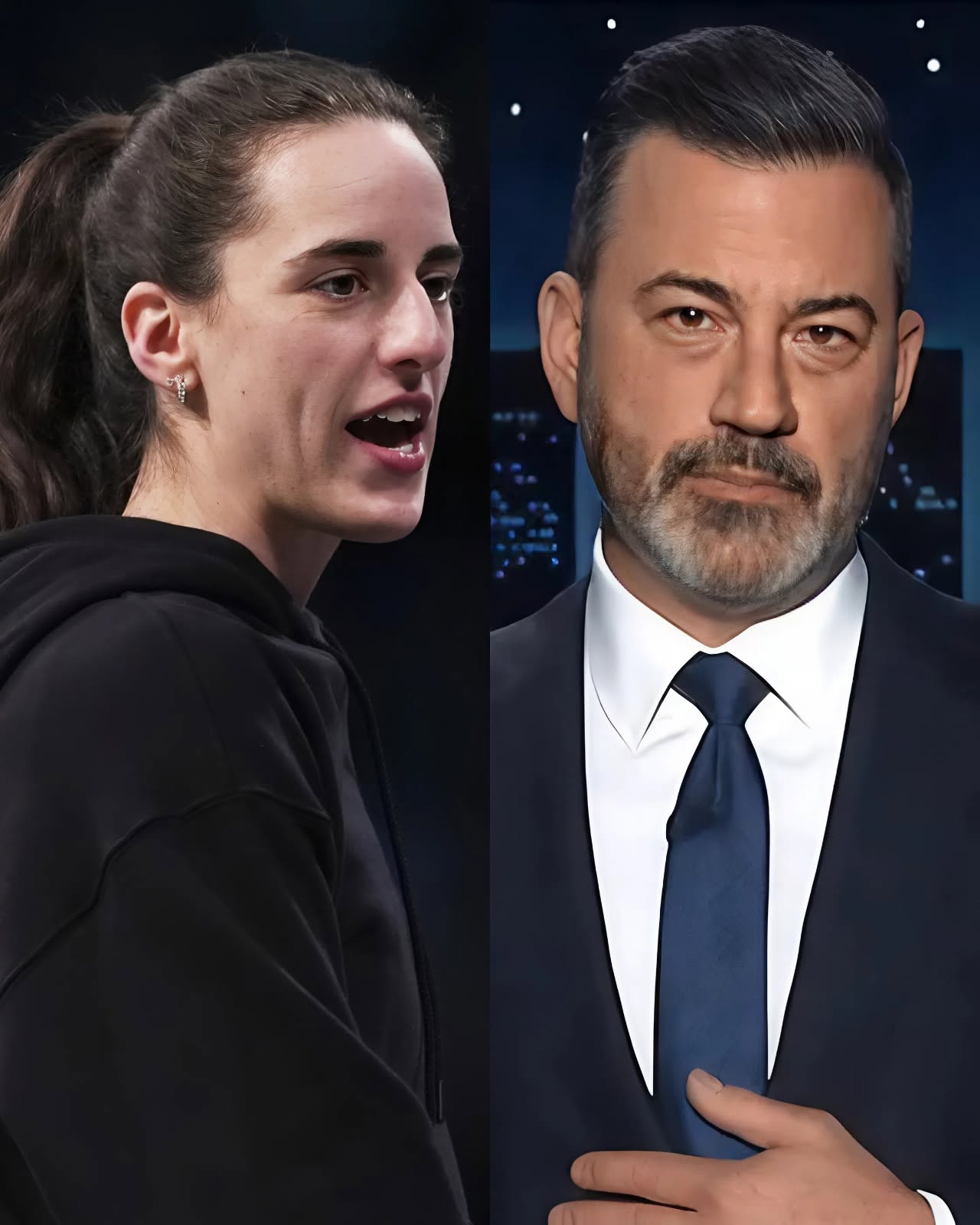
🚨 CAITLIN CLARK “DEMANDS A NATIONWIDE BOYCOTT OF JIMMY KIMMEL” 😒 — THE EXPLOSIVE CLAIM IS SPREADING FAST, BUT DID THE WNBA SUPERSTAR ACTUALLY SAY IT?
A stunning claim involving Indiana Fever superstar Caitlin Clark and late-night host Jimmy Kimmel is racing across social media, dragging one of America’s biggest sports stars into yet another heated cultural debate.
According to the viral story, Clark didn’t merely criticize Kimmel.
She supposedly demanded a nationwide boycott, branded the television host a “toxic presence,” and accused him of using his platform to “spread hate.”
The alleged comments immediately created the perfect internet firestorm.
One side could celebrate Clark as an athlete supposedly willing to challenge a powerful media personality.
Another could accuse her of attacking free expression.
And suddenly a basketball superstar would find herself at the center of a national argument about entertainment, politics, accountability and free speech.
There’s only one major problem:
There is currently no credible evidence that Caitlin Clark made those statements.
No authenticated interview containing the alleged remarks has surfaced.
No verified Clark social-media account appears to contain the supposed boycott demand.
And searches of recent credible reporting do not produce evidence of Clark describing Kimmel as a “toxic presence” or demanding that Americans stop watching him.
That’s particularly important because Jimmy Kimmel has genuinely been involved in major controversies over the last year.
In September 2025, ABC temporarily suspended Jimmy Kimmel Live! following controversy over remarks Kimmel made after the killing of conservative activist Charlie Kirk. The suspension itself then generated an enormous free-speech debate before Kimmel returned to television.
The controversy didn’t end there.
In April 2026, President Donald Trump called for ABC to fire Kimmel after first lady Melania Trump criticized comments the comedian had made about the president and first lady.
So the larger Kimmel debate is real.
What isn’t established is Clark’s involvement in it.
And that distinction changes everything.
Clark has become an unusually powerful name online.
Attach “Caitlin Clark” to a headline involving ESPN, politics, another WNBA player, or a television personality, and the story can spread extraordinarily quickly.
We’ve seen this pattern before.
In 2024, a viral story claimed Clark had rejected a $1 million offer to appear on The View.
PolitiFact investigated and found no evidence supporting it. The story originated with a self-described satire operation before spreading elsewhere without the satire context.
That history provides an important warning for the current Kimmel claim.
A quotation doesn’t become authentic simply because quotation marks appear around it.
A dramatic headline doesn’t become reporting simply because thousands of people share it.
And Clark’s enormous popularity makes her particularly vulnerable to having political or cultural positions attributed to her that she never publicly expressed.
Her documented comments often point in a considerably different direction.
When Clark was asked in 2024 about people using her name in broader cultural battles, she said she didn’t spend much time thinking about those conversations and wanted to concentrate on basketball.
“Basketball’s my job,” she said.
She later explicitly rejected racist and misogynistic behavior connected to discussions surrounding her.
That approach has remained visible.
In July 2026, amid another ugly period of online harassment surrounding the WNBA, Clark condemned hate directed at teammates, opponents and coaches.
“Harassment, hate, none of that is OK,” Clark said.
She also acknowledged that the constant narratives created around her can become personally difficult and frustrating.
Those are documented statements.
The alleged Kimmel boycott is not.
There is also an important distinction between criticizing speech and demanding censorship.
Americans—including athletes—are free to criticize television personalities or choose not to watch their programs.
Likewise, other people are free to criticize those athletes.
Government attempts to pressure broadcasters raise a different constitutional question because the First Amendment constrains government action, not ordinary disagreement between private individuals.
That distinction became central to the debate surrounding Kimmel’s 2025 suspension, with civil-liberties advocates arguing that government pressure on broadcasters threatened free-expression principles.
But none of that establishes that Clark has joined this fight.
And perhaps that is the most revealing part of the viral story.
It doesn’t merely report something Clark supposedly said.
It immediately asks readers to choose between two politically charged interpretations:
Is she courageously opposing division?
Or dangerously attacking free speech?
That framing pushes audiences toward a culture-war argument before establishing the most basic fact:
Did Caitlin Clark actually say any of this?
Right now, credible evidence says there is no reason to believe she did.
Clark doesn’t need fictional political confrontations to remain one of America’s most discussed athletes.
Her basketball career already generates enormous audiences.
Her performances create headlines.
Her interactions with opponents become national debates.
And her influence has helped transform attention around women’s basketball.
That alone guarantees that people will continue trying to attach larger narratives to her name.
The responsible response is simple.
Before choosing sides in the supposed Caitlin Clark-versus-Jimmy Kimmel battle, find the original statement.
Find the interview.
Find the video.
Find the verified post.
Until that evidence exists, the dramatic nationwide-boycott story should be treated as an unsupported viral claim—not a documented declaration from Caitlin Clark.
Because sometimes the biggest controversy surrounding an athlete isn’t what she said.
It’s what the internet decided to say for her.