A Championship Celebration With an Unexpected Message
The Golden State Valkyries had every reason to celebrate after defeating the Atlanta Dream 68-63 in Game 7 of the 2026 WNBA Finals. Their historic victory delivered the franchise’s first championship and completed one of the most dramatic postseason runs in recent league history.
But amid the celebration, another storyline suddenly captured basketball fans’ attention. Golden State players began revisiting a gesture Angel Reese had made earlier in the series, transforming an ordinary basketball taunt into one of the championship’s most widely discussed moments.
The gesture was simple: a thumb and index finger held close together, commonly understood in basketball as the “too small” celebration. Reese had used it while Atlanta appeared to control the series. Now Golden State had the trophy.
For some supporters, the response represented harmless competitive payback. Others wondered whether continuing the exchange after the championship was unnecessary. Either way, the moment demonstrated how quickly basketball celebrations can become part of a much larger public conversation.
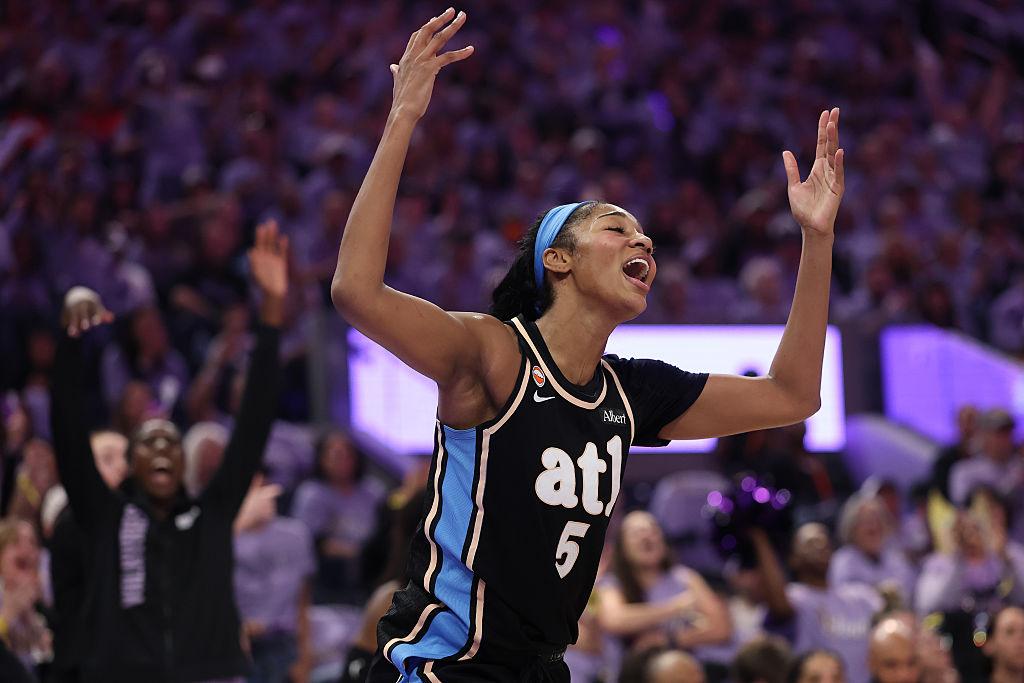
How Angel Reese’s Original Taunt Started Everything
The controversy began during Game 3 of the Finals, when Atlanta delivered a commanding performance against Golden State. Reese contributed 21 points and 12 rebounds as the Dream secured a 97-71 victory.
Late in the contest, with Atlanta holding a comfortable advantage, Reese directed a “too small” gesture toward the Valkyries’ bench. The celebration appeared connected to her competitive exchanges with Golden State rookie Aminata Gueye.
Reese was also heard directing dismissive comments toward Gueye during the closing stages. The moment attracted attention because it occurred while Atlanta was comfortably ahead, making the gesture especially memorable to people following the series.
At that point, the Dream led the Finals 2-1. Reese had produced consecutive impressive performances, including a 30-point, 16-rebound effort in Game 2, and Atlanta appeared to have established significant momentum.
The celebration therefore reflected a moment of confidence. Reese and her teammates were competing effectively, and the possibility of winning the franchise’s first championship seemed increasingly realistic.
What nobody knew was how differently the situation would look by the end of the series.
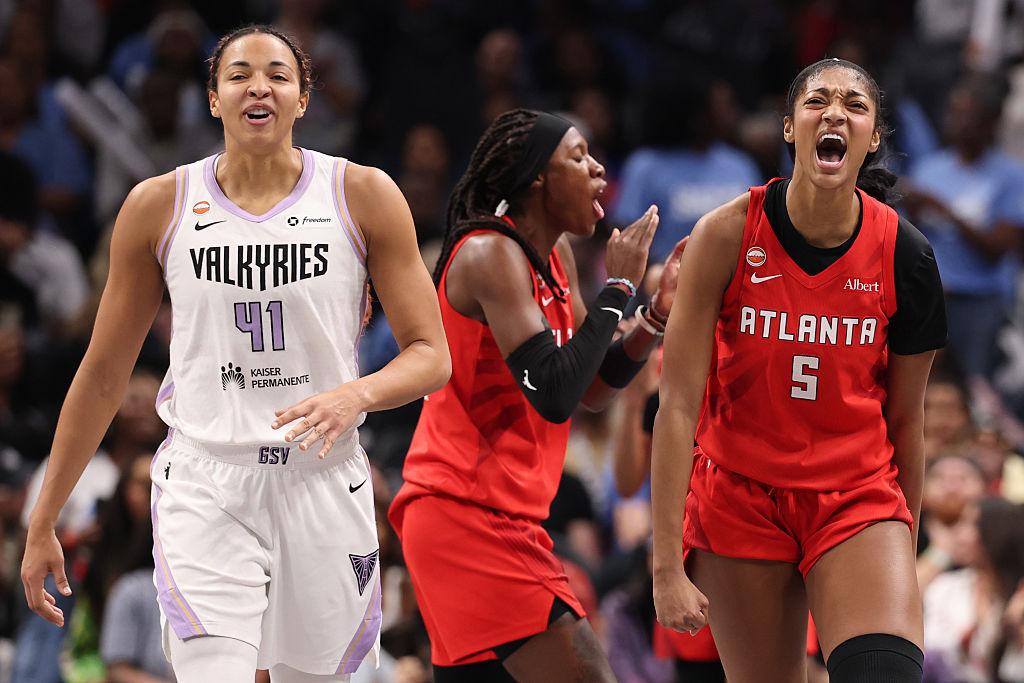
Golden State Turns the Championship Series Around
The Valkyries refused to allow the Game 3 defeat to determine their season. Rather than focusing exclusively on Atlanta’s celebrations, Golden State adjusted its approach and continued competing through a difficult championship series.
The next two games shifted momentum dramatically. Golden State won Games 4 and 5, taking a 3-2 advantage and placing the Dream under pressure to prevent their championship hopes from ending.
Atlanta responded by winning Game 6, forcing a decisive seventh contest. With the series tied, the earlier gestures and exchanges became secondary to a much more important question: which team would execute better when the championship was at stake?
Game 7 provided the answer. Despite trailing 30-24 at halftime, Golden State produced a powerful second-half response behind Gabby Williams, who finished with 30 points and helped secure the five-point victory.
The Valkyries celebrated a championship that had seemed uncertain only days earlier. For Atlanta, the defeat was especially painful because the team had been within one victory of making franchise history.
The reversal also brought renewed attention to Reese’s Game 3 celebration. A gesture made during a comfortable victory now looked very different after the team on the receiving end had won the title.
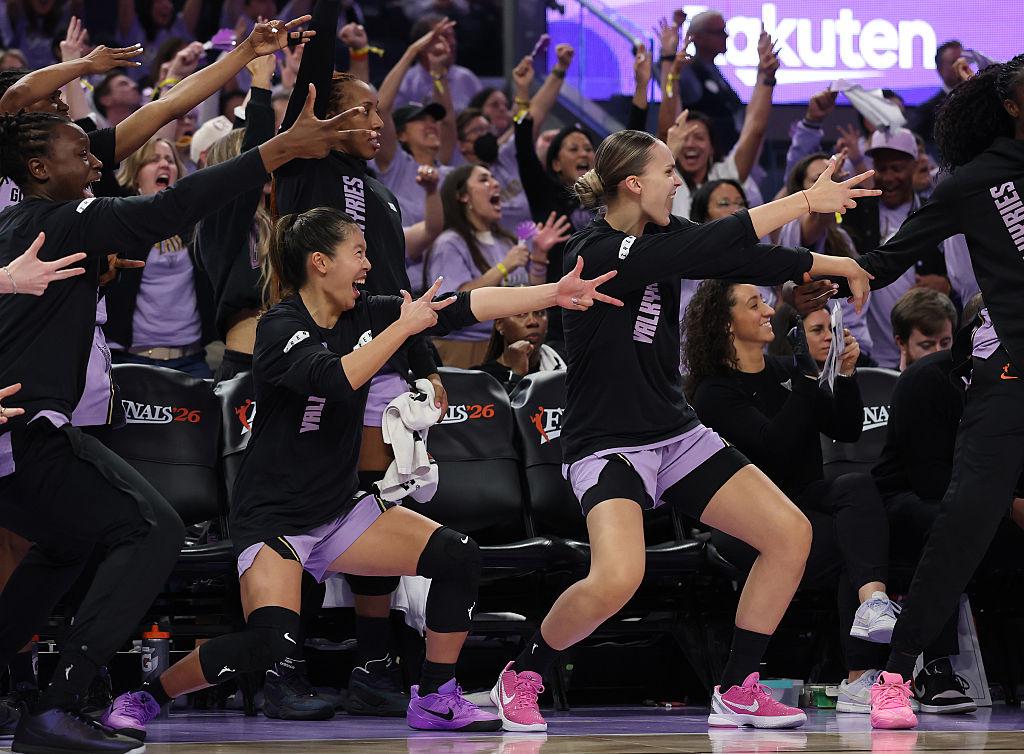
Tiffany Hayes Brings the “Too Small” Gesture Back
One of the clearest responses came from Golden State guard Tiffany Hayes. During an Instagram Live broadcast from the Valkyries’ championship locker room, Hayes repeated the familiar “too small” gesture.
The timing gave the action an unmistakable connection to the earlier exchange. Golden State had just defeated Atlanta, and a celebration once associated with Reese was now appearing among the champions.
Hayes did not need to deliver a lengthy speech for fans to recognize the reference. The hand motion had already become a recognizable part of the Finals storyline, and its return immediately attracted attention online.
Aminata Gueye also contributed to the renewed discussion through social media. Reports described her sharing an image of Reese’s earlier gesture after Golden State secured the championship.
Those actions reinforced the competitive nature of the exchange. The Valkyries had experienced the frustration of falling behind in the series, and their eventual victory created an opportunity to revisit what had happened.
However, the players’ precise private motivations cannot be established from a gesture alone. It is reasonable to recognize the apparent reference without assuming that every participant intended to create a lasting personal dispute.
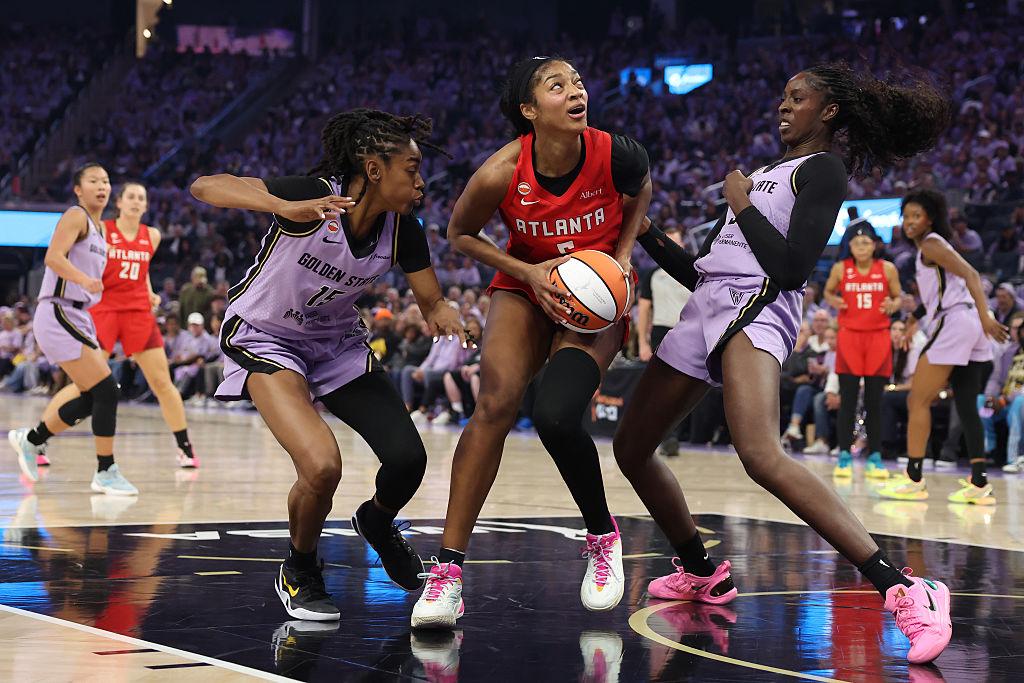
Warriors Rookie Yaxel Lendeborg Joins the Conversation
The storyline became even more unusual when an NBA player entered the discussion. Golden State Warriors rookie Yaxel Lendeborg was attending Game 7 courtside, where he was photographed making the same “too small” hand gesture.
Lendeborg’s participation created an unexpected connection between the Warriors and their WNBA counterparts. Although he was not competing in the Finals, his visible reaction demonstrated how widely the series had attracted attention.
Reports placed him at the game alongside Warriors veteran Draymond Green. Both were supporting the Valkyries as the franchise pursued a historic championship.
Images of Lendeborg making the gesture spread across social media, with some viewers interpreting his response as playful support for Golden State and others viewing it as another example of Reese becoming the target of public criticism.
The moment also attracted attention because Lendeborg had already developed a reputation for outspoken reactions during the opening weeks of his NBA career.
Still, his involvement should be distinguished from the actions of the Valkyries players themselves. Lendeborg was a spectator showing support for the local WNBA team, not an opponent who had personally competed against Reese during the championship series.
Why Fans Are Divided Over the Celebration
Basketball has a long tradition of expressive celebrations. Players point toward opponents, celebrate difficult shots, exchange words, and occasionally respond to earlier taunts after winning important games.
From that perspective, Golden State’s response can be interpreted as a familiar part of competitive sports. Reese had used the gesture while Atlanta was winning, and Golden State’s eventual championship offered an opportunity to return it.
Supporters of that interpretation argue that players who celebrate openly should expect opponents to respond when circumstances change. The exchange becomes another memorable detail in a closely contested rivalry.
Others question whether repeating the gesture after the championship added anything meaningful to Golden State’s achievement. The Valkyries had already earned the strongest possible response through their victory on the court.
There is also a difference between criticizing an individual celebration and making broader claims about someone’s character. Reese’s Game 3 gesture was public, and discussing it is reasonable. But it does not establish everything about her relationships with opponents.
The debate illustrates why emotional sports moments can be interpreted in different ways. What one fan sees as harmless humor, another may consider unnecessary disrespect.
Neither interpretation changes the championship result.
The Difficult Ending to Angel Reese’s Finals Run
The revived taunt became particularly painful because Reese’s production declined during the latter portion of the series.
After delivering standout performances in Games 2 and 3, she encountered greater difficulty against Golden State’s defensive approach. Across Games 4 through 7, Reese scored a combined 38 points while struggling with shooting efficiency and turnovers.
In Game 7, she finished with eight points and 12 rebounds. Her work on the glass remained important, but Atlanta ultimately could not generate enough offense to overcome Golden State’s second-half surge.
Those numbers became part of the online discussion because they contrasted sharply with her earlier confidence. Critics pointed to the difference between the dominant performances that preceded the gesture and the difficult games that followed.
Yet the statistical decline should not be treated as proof that the taunt caused Atlanta’s defeat. Basketball outcomes depend on defensive adjustments, execution, fatigue, team strategy, and numerous other factors.
Golden State deserves recognition for its response throughout the series, while Reese’s earlier performances remain part of the reason Atlanta reached the championship stage.
One difficult ending does not erase an entire postseason. It does, however, provide a powerful reminder of how quickly momentum can change in professional sports.
What This Rivalry Could Mean for the Next WNBA Season
The Finals ended with Golden State celebrating and Atlanta confronting an emotional defeat, but the competitive storyline may continue beyond the championship series.
Reese remains a prominent young player with significant experience already behind her. Reaching the Finals provided opportunities to learn about difficult matchups, championship pressure, and how opponents adjust over a prolonged series.
For the Valkyries, the victory established an important milestone. Winning the title in the franchise’s second season demonstrated that the organization could compete successfully at the highest level.
Aminata Gueye, Tiffany Hayes, and their teammates now have a championship achievement that will remain part of the franchise’s history. Their response to Reese’s gesture is only one small element of that larger accomplishment.
The next time Atlanta faces Golden State, fans may revisit the hand motion and the events surrounding it. However, another exchange is not guaranteed, and none of the players involved must continue the rivalry in the same way.
What is certain is that the 2026 Finals produced a memorable sequence: Atlanta’s dominant Game 3 victory, Reese’s confident gesture, Golden State’s comeback, and the champions’ subsequent celebration.
The story captures both the excitement and unpredictability of elite competition. Confidence can energize athletes, but circumstances may change before a championship is decided.
For Reese, the experience offers another chapter in a career that has already attracted considerable attention. For Golden State, the final result provides the ultimate achievement that mattered most.
The debate about sportsmanship may continue, but one distinction remains important. A playful gesture, even one that attracts enormous attention, should not overshadow the basketball performances that determined the title.
Golden State won because it made the necessary adjustments and delivered when the championship was on the line.
Reese and the Dream came close, but their pursuit ended one victory short.
The “too small” celebration became a symbol of that reversal, creating a moment that fans will likely remember whenever these teams meet again.
Whether the exchange was deserved payback or a celebration taken too far is a question supporters can debate.
The championship itself, however, was decided on the court.
And after seven games, the Golden State Valkyries had earned the final word.