

BREAKING: Chiefs Beat Dolphins 24–10 as Officiating Debate Explodes After Hard-Fought Battle
The Kansas City Chiefs are 3–0.
But after their 24–10 victory over the Miami Dolphins on Sunday, the final score was only part of the story.
For long stretches at Hard Rock Stadium, Kansas City looked anything but comfortable. Miami controlled possession, sustained drives and repeatedly challenged the Chiefs’ defense. Yet when the biggest moments arrived, Kansas City made the plays that mattered.
Patrick Mahomes delivered two touchdown passes. Kenneth Walker III scored twice. Travis Kelce produced the decisive touchdown late in the fourth quarter.
And the Chiefs walked away with another victory.
Still, the game has generated a wave of discussion surrounding physical play, officiating and one particularly controversial roughing-the-passer call involving Mahomes.
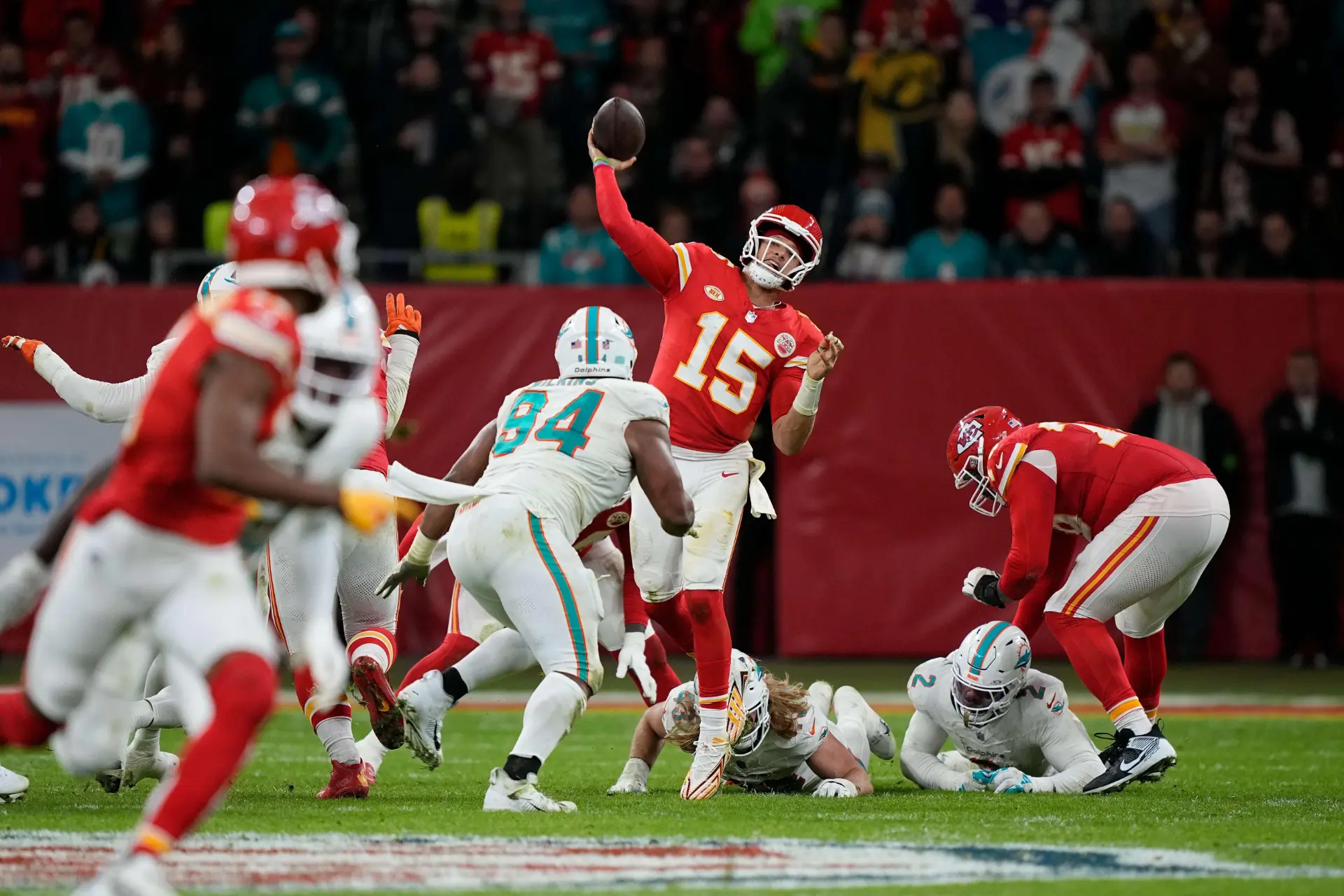
That sequence became one of the most debated moments of the afternoon, with critics questioning whether the penalty was justified. Yahoo Sports reported that two officials flagged Miami’s defender for roughing the passer after contact with Mahomes, even though the defender appeared to make an effort to avoid landing with his full body weight.
The penalty mattered.
Without the call, Kansas City would have faced a different situation on the drive. Instead, the Chiefs received a fresh set of downs and eventually extended their lead to 17–10.
That moment helped fuel the broader argument over whether the officials had influenced the momentum of the game.
But there was another story developing on the field.
Miami Refused to Go Away
The Dolphins entered the matchup winless, but their record did not reflect the intensity they brought into the home opener.
Miami immediately showed that it was prepared to challenge Kansas City.
The Dolphins controlled the football for 34:21, compared with 25:39 for the Chiefs. They also managed to sustain drives throughout the afternoon, putting pressure on a Kansas City defense that was forced to remain disciplined.
The problem for Miami was finishing.
The Dolphins went 0-for-3 on fourth-down attempts.
Those missed opportunities became increasingly costly as the game progressed.
Kansas City, meanwhile, did not need to dominate every possession. The Chiefs simply needed to capitalize when Miami made mistakes.
That is exactly what happened late in the game.
Kenneth Walker III Changes the Game
Kenneth Walker III emerged as one of Kansas City’s most important offensive weapons.
Walker scored a 10-yard rushing touchdown in the first quarter, giving the Chiefs an early lead.
He later added a receiving touchdown on a five-yard pass from Mahomes.
His two touchdowns accounted for a significant portion of Kansas City’s offensive production and allowed the Chiefs to maintain control despite Miami’s constant pressure.
Mahomes finished with 246 passing yards, completing 20 of 24 attempts with two touchdown passes and one interception.
Those numbers were efficient rather than spectacular.
And that distinction mattered.
Kansas City entered the game averaging more than 450 yards and 32 points per game, but Miami prevented the Chiefs from producing another explosive offensive performance.
Instead, the Chiefs had to win through efficiency, situational football and late-game execution.
De’Von Achane’s Early Exit
Miami’s task became even more difficult when Pro Bowl running back De’Von Achane left with a knee injury on the opening drive.
Achane was unavailable for much of the game, removing one of the Dolphins’ most dangerous offensive weapons.
Despite losing Achane, Miami continued to move the football.
That was one of the most revealing aspects of the afternoon.
The Dolphins did not collapse.
They stayed within one score deep into the fourth quarter.
They forced Kansas City to work for nearly every possession.
But the Chiefs had something Miami could not manufacture consistently enough: execution when the margin for error disappeared.
The Fourth-Down Decision
With Kansas City leading 17–10 in the fourth quarter, Miami faced a critical decision.
The Dolphins had the ball at their own 48-yard line and needed five yards on fourth down.
They went for it.
Malik Willis’ pass fell incomplete.
Suddenly, Kansas City had excellent field position and an opportunity to create separation.
The Chiefs did exactly that.
With 2:55 remaining, Mahomes connected with Travis Kelce for an 11-yard touchdown.
The play changed everything.
A game that had remained within one possession for most of the afternoon suddenly became a two-score contest.
Kansas City led 24–10.
Miami needed a miracle.
Instead, the Chiefs defense delivered another decisive play.
George Karlaftis intercepted Willis on the ensuing possession, effectively ending Miami’s comeback hopes.
The Chiefs had survived.
The Officiating Debate
But the game did not end with the final whistle.
The officiating became a major part of the postgame conversation.
The roughing-the-passer penalty against Miami generated immediate debate because of the nature of the contact with Mahomes.
Yahoo Sports described the call as questionable and noted that the penalty gave Kansas City a fresh set of downs before the Chiefs eventually kicked a field goal to extend their lead to 17–10.
That does not, by itself, establish that the officials intentionally favored Kansas City.
It does, however, explain why the sequence became such a talking point.
Football is a game where one penalty can dramatically alter field position, possession and momentum.
And in a game that finished 24–10, the difference between a punt and an extended drive mattered.
The viral storyline surrounding the game pushes that argument much further, portraying the officiating as part of a larger problem involving player safety and inconsistent standards.
Those stronger claims require evidence beyond a single penalty.
What can be established is that the game contained a controversial roughing call and that the decision directly affected a Kansas City scoring drive.
Andy Reid’s Team Finds a Way
For Andy Reid, the most important fact was simple.
His team won.
Kansas City did not play a perfect game.
The offense slowed considerably after its early success.
The defense surrendered extended possessions.
Miami ran the ball effectively and controlled possession.
Yet Kansas City still finished with a 24–10 victory.
After the game, Chiefs players emphasized that the team had faced adversity and found a way to win.
Chris Jones described the game as another reminder that nothing comes easily in the NFL. He said Miami came out aggressively and that Kansas City had to correct mistakes before moving forward.
Mahomes delivered a similar message.
The Chiefs quarterback acknowledged that Kansas City could have played better, but the team ultimately found a way to secure the victory. The Chiefs’ official postgame coverage highlighted Mahomes’ message: “We found a way to win.”
That may be the central theme of the afternoon.
Not domination.
Not perfection.
Survival.
A 3–0 Record
The victory moved Kansas City to 3–0.
That is significant because the Chiefs have now demonstrated an ability to win different types of games.
They have won convincingly.
They have survived a dramatic overtime contest.
And now they have won a road game in which their offense was not operating at its highest level.
The Chiefs’ official video library also highlights several of the afternoon’s defining plays, including Walker’s touchdowns, Mahomes’ deep connection with Kelce, Kelce’s late touchdown and Karlaftis’ interception.
Those plays tell the story better than any single statistic.
Kansas City made the plays.
Miami missed opportunities.
And the game eventually slipped away from the Dolphins.
What Comes Next?
For Miami, the 0–3 record makes the loss even more painful.
The Dolphins competed.
They controlled possession.
They repeatedly moved the football.
But they failed on all three fourth-down attempts and could not produce points during the fourth quarter.
For Kansas City, the victory provides another opportunity to improve without paying the price in the standings.
The Chiefs know they have mistakes to correct.
The defense must clean up its execution.
The offense needs greater consistency.
And the team cannot afford to rely on late-game heroics every week.
But there is value in winning while knowing you can still get better.
That is exactly what Kansas City accomplished in Miami.
The Final Word
The final score reads: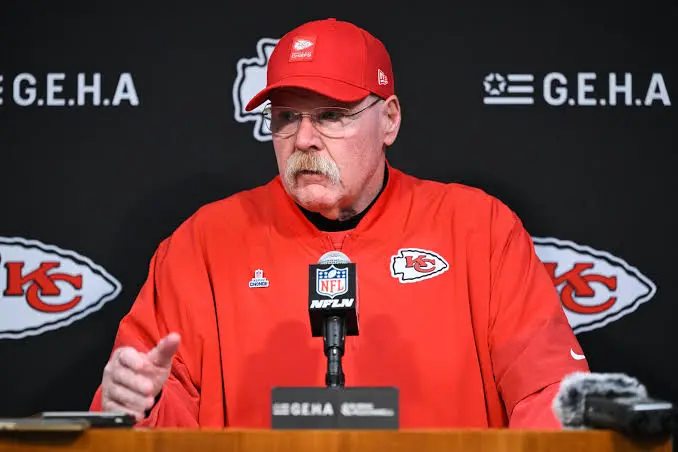
Kansas City Chiefs 24
Miami Dolphins 10
But the afternoon was much closer than those numbers suggest.
Miami controlled possession.
Kansas City struggled to pull away.
A controversial roughing-the-passer penalty sparked debate.
The Dolphins failed to convert critical fourth downs.
Then Mahomes found Kelce.
Karlaftis intercepted Willis.
And the Chiefs closed the door.
Whether the officiating debate continues throughout the week will depend on how fans, analysts and league observers interpret the controversial moments.
But one fact cannot be disputed.
Kansas City leaves Miami with a perfect 3–0 record.
The Dolphins leave with an 0–3 record and plenty of questions.
And the Chiefs now have another week to prove that this victory was not simply about surviving adversity — but about becoming a more complete team before the biggest games of the season arrive.