Kyle Larson’s incredible final-lap victory at Talladega should have been remembered simply as one of the wildest finishes of the 2026 NASCAR Cup Series season.
Instead, it immediately reopened one of NASCAR’s oldest officiating arguments.
The double-yellow-line rule.
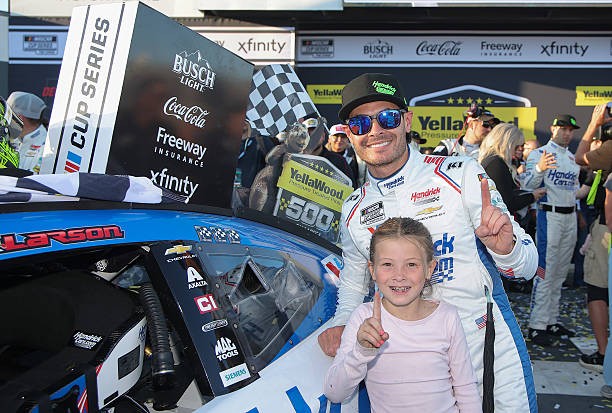
Larson went from 11th place on the final lap to the lead, charging through traffic and beating William Byron by just 0.041 seconds to claim his first career Cup victory on a drafting track.
But almost immediately after the checkered flag, videos and photographs began circulating showing several cars dangerously close to — and in some cases apparently below — the double yellow line.
Larson’s winning move became the center of the initial controversy.
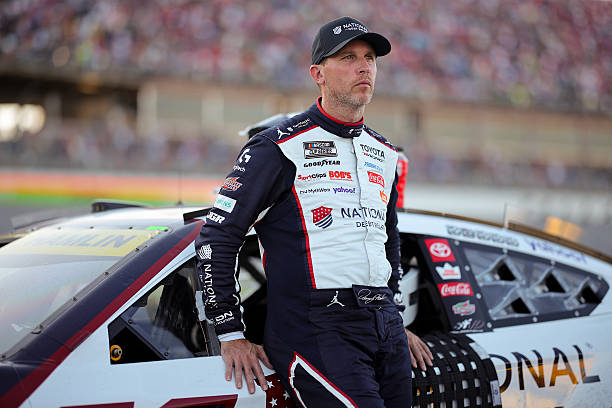
Denny Hamlin, however, believes fans are focusing on the wrong car.
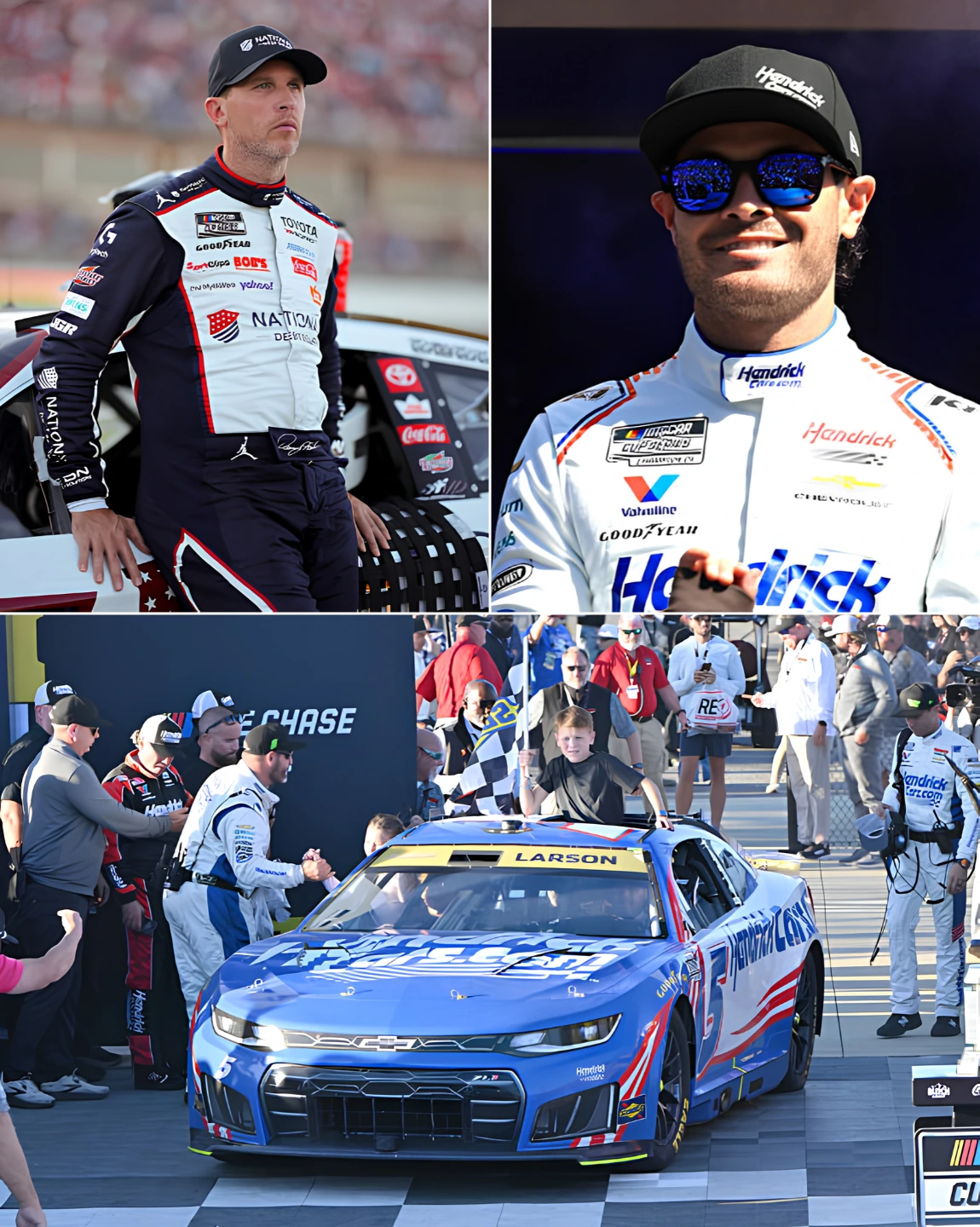
“He did not go below the yellow line,” Hamlin said while discussing Larson’s finish on his Actions Detrimental podcast.
Hamlin defended Larson.
Then he turned his attention toward NASCAR.
And that is where his criticism became much stronger.
Hamlin Says Larson’s Win Was Legitimate
Larson’s most scrutinized moment came as he charged toward the finish.
His No. 5 Chevrolet ran extremely close to the yellow boundary while working past traffic in the tri-oval.
NASCAR reviewed the situation and determined there was no violation.
The victory stood.
Hamlin agreed.
He did not believe Larson’s left-side tires went far enough below the boundary to constitute an illegal pass.
That distinction is important.
Hamlin was not accusing Larson of stealing the victory.
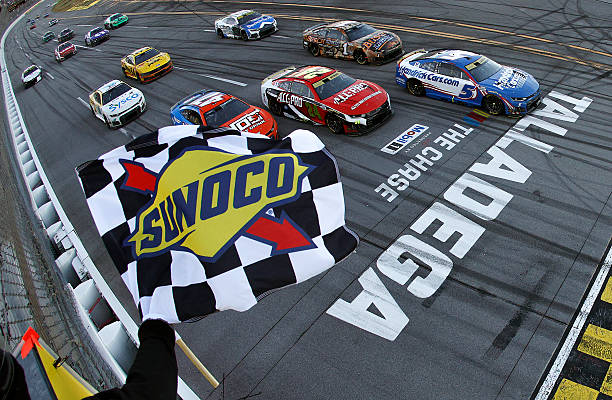
He was questioning why NASCAR appeared to apply a different standard to other cars during the same final lap.
According to Hamlin, several competitors appeared to cross beneath the line without receiving penalties.
“I think on the final lap there was about three cars that went below the yellow line,” Hamlin said.
That became the larger issue.
Austin Hill’s Move Raised the Biggest Question
Hamlin focused specifically on Austin Hill.
Earlier on the final lap, Hill made a move underneath Larson while exiting Turn 2.
His No. 33 Chevrolet appeared to put its left-side tires below the double yellow line.
Hamlin was much more certain about that moment.
“He’s below the yellow line,” Hamlin said.
The difficult question was why.
Did Hill voluntarily drive beneath the line to gain position?
Or did Larson’s movement force him there?
That difference matters under NASCAR rules.
Drivers cannot improve their position by racing below the double yellow line.
But NASCAR also has the ability to penalize a driver who forces another competitor below the boundary while attempting to block a pass.
Hamlin believed Larson’s movement toward Hill may have contributed to what happened.
That is exactly why he believes the rule has become too subjective.
“It’s Too Wishy-Washy”
Hamlin’s frustration was not really about one call.
It was about interpretation.
Drivers understand that NASCAR officials must make judgment calls.
But Hamlin believes the double-yellow-line rule has reached a point where competitors do not always know what the standard actually is.
His description was blunt.
“It’s just too wishy-washy for my taste.”
Hamlin then went even further.
“I’m tired of the ambiguity of it.”
His solution?
Remove the confusion entirely.
“Let’s just throw it away. Let’s have no-holds-barred racing. That’s what I want.”
That statement captures the frustration many drivers and fans have expressed for years.
If NASCAR cannot enforce the rule consistently, Hamlin would rather eliminate it than continue debating subjective interpretations every time Talladega or Daytona produces a close finish.
NASCAR’s Rule Is More Complicated Than It Looks
On television, the rule seems simple.
Do not pass below the yellow line.
But NASCAR’s actual rulebook includes several layers.
At superspeedway events, cars are supposed to compete above the double painted lines.
Passing below the lines to advance position can result in a black flag.
Forcing another vehicle below the lines while blocking can also lead to a penalty.
NASCAR defines being “below” the line through the position of the left-side tires relative to the inside painted boundary.
That sounds straightforward.
In reality, Talladega rarely creates straightforward situations.
Cars are inches apart.
Drivers are blocking.
Cars are being pushed from behind.
Momentum changes instantly.
A driver might move below the line voluntarily.
Another might be forced there.
Another might touch the boundary while trying to avoid a crash.
Officials then have only seconds to determine intent and advantage.
That is where the arguments begin.
Larson Himself Knew It Was Close
Even Larson admitted he understood why the finish drew attention.
After the race, he acknowledged that his car came dangerously close to the boundary.
He said he would have been extremely frustrated with himself if he had actually crossed below the line and lost the victory because of it.
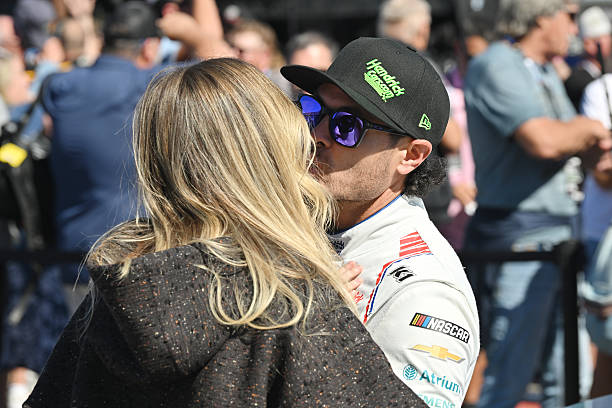
Larson also admitted he began celebrating before reaching the finish line.
His momentum carried him toward the inside boundary while he was already pumping his fist.
Crew chief Cliff Daniels joked afterward that Larson might need to save the celebration until after crossing the line next time.
Ultimately, NASCAR found no violation.
Larson kept the victory.
The Controversy Matters Even More Because of the Championship
This was not an ordinary win.
Talladega dramatically changed the championship picture.
Larson entered the weekend holding only a five-point advantage.
He left with a 73-point lead over Hamlin with just Martinsville and Homestead remaining.
Larson scored 71 points at Talladega after finishing fourth in Stage 1, second in Stage 2 and winning the race.
His first drafting-track victory came after 58 previous Cup attempts without a win at Daytona, Talladega or Atlanta.
For Hamlin, the timing could hardly have been worse.
He finished eighth.
He moved up to second in the championship standings.
Yet he lost 42 points to Larson in one afternoon.
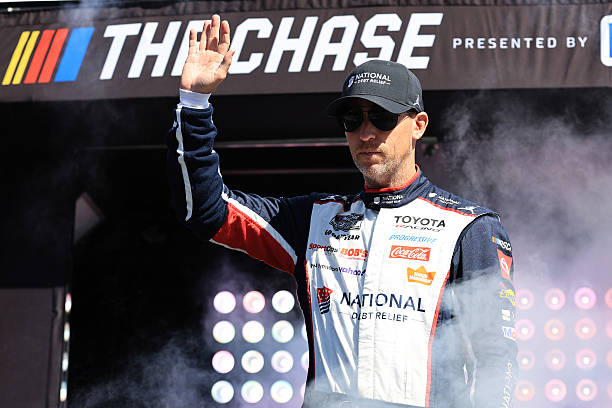
After the race, Hamlin admitted the title battle had become extremely difficult.
“They’ve done a lot of things right, and a lot of things have really gone right,” Hamlin said of Larson’s team.
He added that if Larson can simply keep the car healthy over the final two races, he is in a very strong championship position.
Hamlin’s Complaint Was Not Sour Grapes Against Larson
That context makes Hamlin’s defense of Larson particularly noteworthy.
Larson is the driver standing directly between Hamlin and the championship.
If Hamlin wanted to argue that the No. 5 deserved a penalty, he had every competitive reason to do so.
Instead, he said Larson did not violate the rule.
His criticism targeted NASCAR’s broader enforcement.
That makes the issue less about one championship rival and more about officiating consistency.
Hamlin believes drivers need to know exactly where the boundary is.
One tire?
Two tires?
A full car width?
What if another driver forces you below?
What happens if the violation occurs on the final lap?
Those questions continue to produce different interpretations.
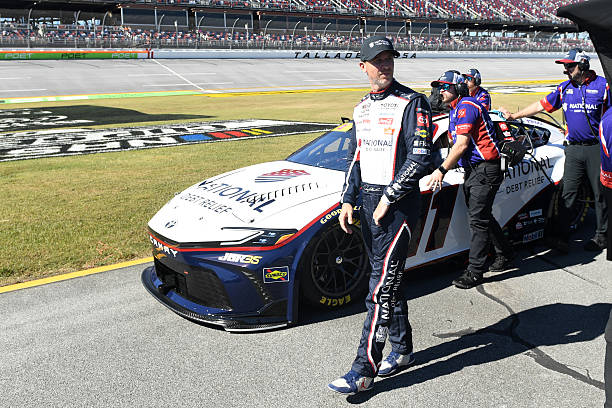
Other Drivers Are Confused Too
Hamlin is not alone.
Ryan Blaney also questioned exactly what NASCAR considers below the yellow line.
Blaney pointed toward Hill’s car and wondered how officials would have handled the situation if Hill had actually won the race.
Joey Logano acknowledged that Larson may have forced Hill below the line but said he did not believe Larson was intentionally trying to gain an unfair advantage.
At the same time, Logano said the calls NASCAR made were ultimately correct.
That range of opinions demonstrates Hamlin’s larger point.
Even veteran Cup drivers do not always interpret the rule the same way.
NASCAR Chose Not to Penalize Anyone
Despite the debate, NASCAR has not changed the Talladega results.
Larson remains the winner.
No yellow-line penalty altered the finishing order.
The sanctioning body also announced no additional penalties from the race weekend after its post-event review.
That means the championship picture remains unchanged.
Larson heads to Martinsville with a 73-point advantage.
Hamlin remains second.
Christopher Bell, Chase Briscoe and the rest of the contenders face an increasingly difficult mathematical challenge.
Hamlin Wants a Clearer Standard
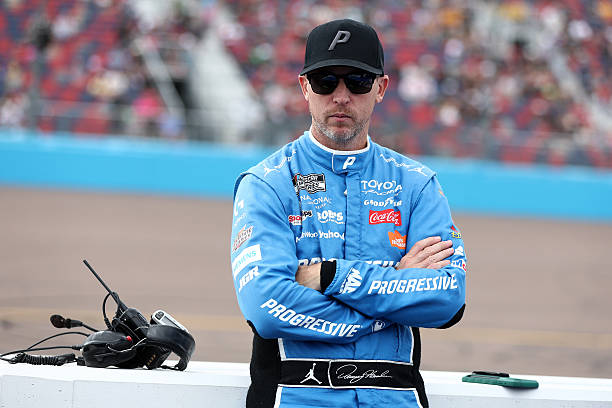
For Hamlin, the Talladega controversy ultimately comes down to predictability.
Drivers can live with strict rules.
They can also adapt to more open racing.
What becomes difficult is a rule whose interpretation seems to change depending on the circumstances.
That is why Hamlin’s reaction went beyond one controversial final lap.
He wants NASCAR to decide exactly what it wants the yellow line to represent.
A hard boundary?
A judgment call?
Or something that should disappear completely?
Until that happens, Talladega will continue producing the same conversation.
Larson’s victory stands.
Hamlin agrees that Larson himself did not illegally cross the line.
But the wild final lap also gave NASCAR another reminder that its double-yellow-line rule remains one of the most disputed and difficult-to-explain parts of superspeedway racing.
And for Hamlin, after 34 weeks of trying not to criticize NASCAR, Talladega was finally the race that broke his patience.