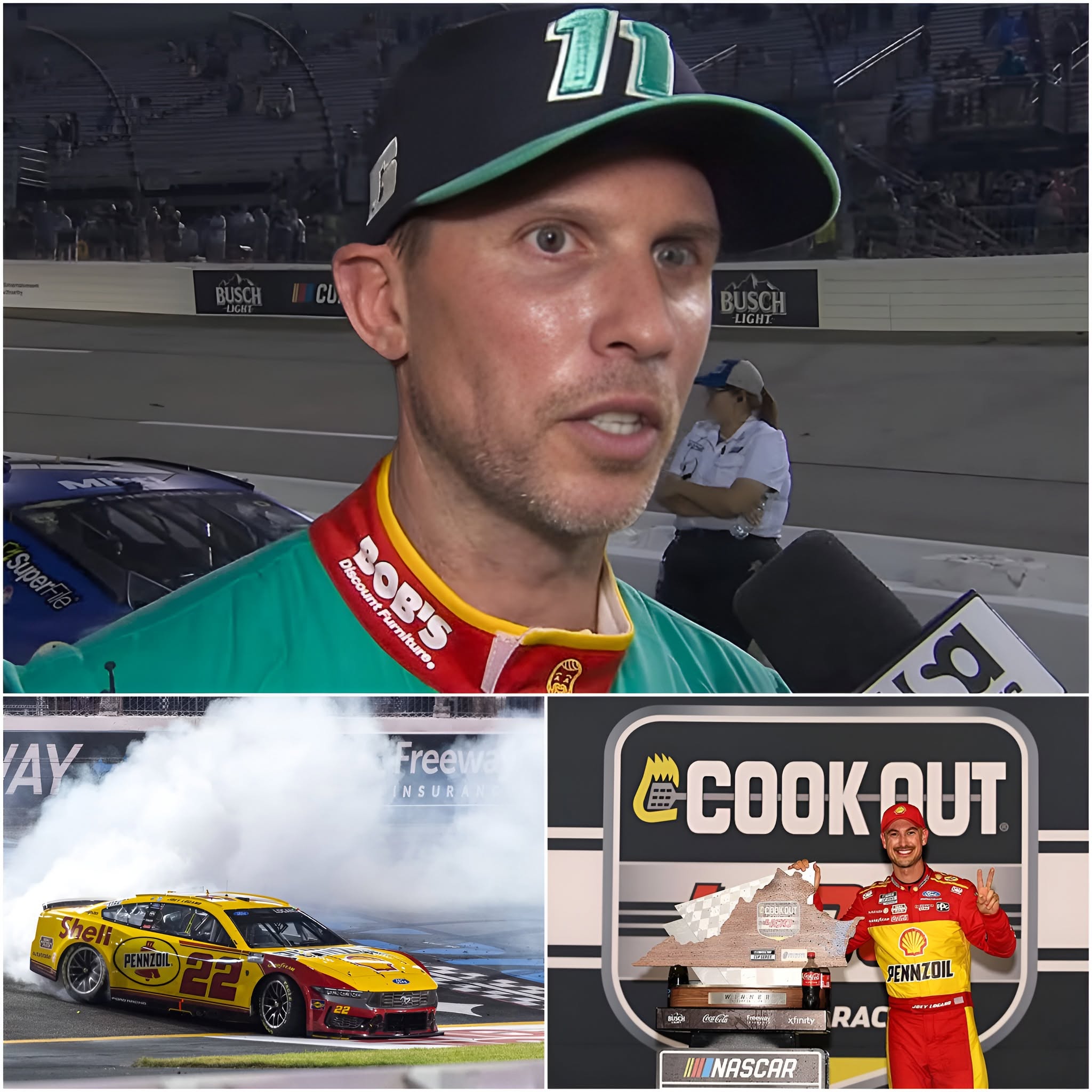
NASCAR Review at Richmond: What Is Known About the Cook Out 400
The Cook Out 400 at Richmond Raceway is one of the most closely watched events on the NASCAR calendar, where strategy, tire management and technical compliance can all play important roles.
However, claims that a driver used prohibited technology or gained an unfair advantage require clear evidence and an official ruling before they can be treated as established facts.
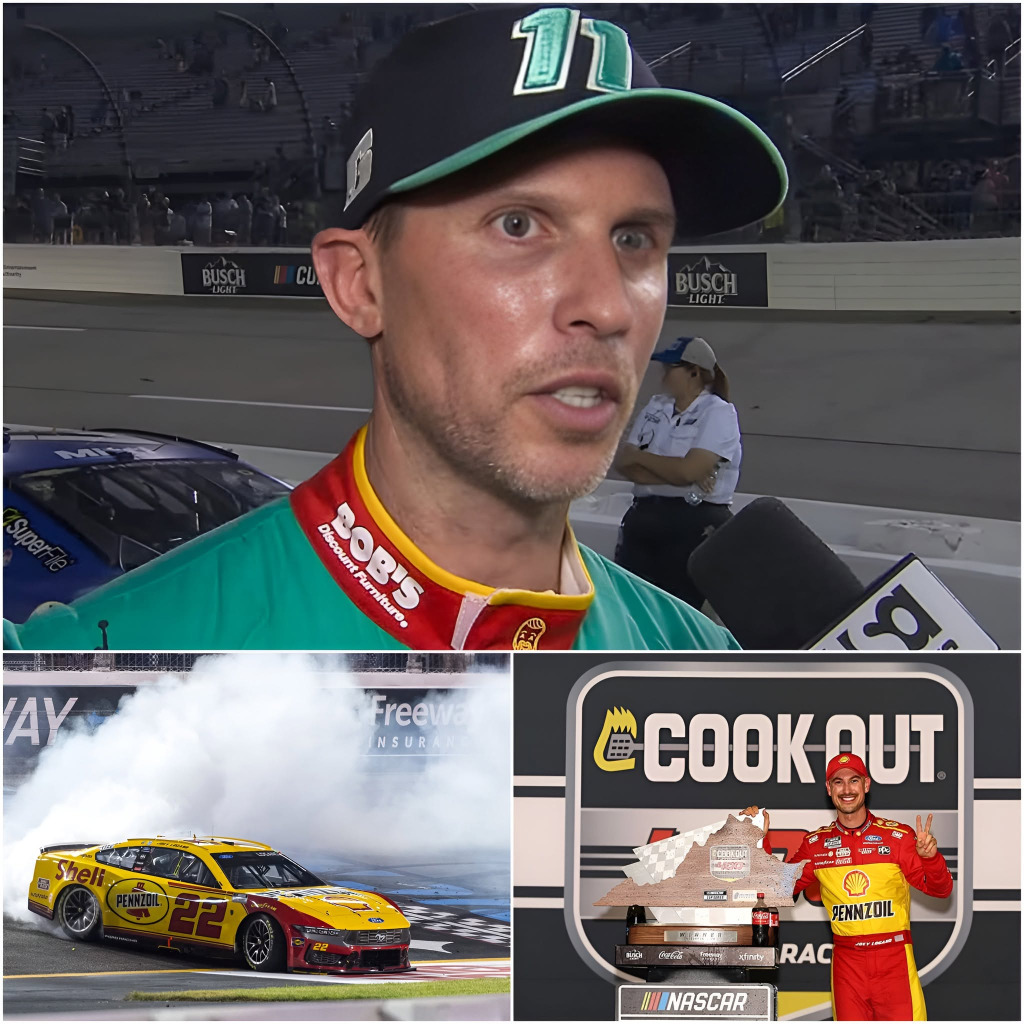
A social-media-style claim alleged that Denny Hamlin accused Joey Logano of using illegal technology on his car during the Cook Out 400 at Richmond Raceway in Virginia, prompting NASCAR to launch an urgent investigation. The claim also suggested that officials uncovered unexpected findings.
There is no verified information provided to substantiate those allegations. In particular, no official NASCAR statement, technical bulletin, post-race penalty report or confirmed statement from Hamlin or Logano has been supplied that establishes such an incident occurred. As a result, the allegations should not be presented as confirmed events.
NASCAR competition is governed by detailed technical regulations covering areas such as vehicle construction, engines, aerodynamic components, tires, electronics and other equipment. Cars are subject to inspection procedures designed to
ensure that competitors comply with those rules. When officials identify a potential violation, NASCAR can conduct additional examinations and determine whether further action is appropriate.
That process is important when evaluating claims involving alleged illegal technology. A driver’s comments, if officially documented, would represent an allegation or opinion rather than proof of a rules violation. Likewise, an investigation would not necessarily mean that NASCAR had determined that a competitor had broken the rules.
In a real competition, technical officials may inspect a vehicle before, during or after an event. Post-race inspections can be particularly significant because NASCAR may conduct more detailed examinations of
components or systems after the conclusion of a race. Depending on the nature of a suspected violation, the sanctioning body can review evidence before announcing a final determination.
Advertisement
This distinction is especially relevant when discussing high-profile drivers such as Hamlin and Logano. Both are established NASCAR competitors and have participated in numerous closely contested races throughout their careers.
Competitive tension between drivers is a normal feature of motorsport, but individual disagreements should not automatically be interpreted as evidence of misconduct.
The claim that Hamlin said, “He cheated—that spot was mine!” therefore requires particular caution. Without a verified interview, official transcript, team statement or reputable report documenting the quotation, it should
not be attributed to Hamlin as a factual statement. Quotes that circulate online can sometimes be incomplete, altered or presented without the context in which they were originally made.
The same principle applies to the allegation concerning “illegal technology.” NASCAR’s technical rules are complex, and an unusual component or technical discovery does not necessarily constitute a rules violation. Officials
must establish whether equipment falls outside the permitted specifications and determine whether the competitor or team is responsible under the applicable regulations.
An investigation, if officially announced, would normally be followed by a determination based on evidence. NASCAR can issue penalties when it concludes that a team or driver has violated its rules.
Such penalties may involve points, fines, suspensions or other sporting consequences depending on the circumstances and the relevant section of the rulebook.
Until an official finding is released, however, describing a competitor as having cheated would go beyond the available evidence.
The Cook Out 400 itself illustrates why technical and sporting issues can attract significant attention. Richmond Raceway is a short track where drivers compete in close quarters and where tire
wear, track position and pit strategy can have a substantial influence on the outcome. Small differences in vehicle performance can therefore become especially noticeable during a long race.
For teams, maintaining compliance is a central part of preparing for every event. NASCAR’s inspection system is intended to create a level playing field by requiring competitors to operate within established technical parameters.
Teams have significant engineering resources, but they must also interpret and comply with a rulebook that is designed to limit performance advantages gained through prohibited modifications.
[Ảnh chưa tải được: xem nguồn ảnh]
When questions arise about a car’s legality, the official inspection process is more reliable than speculation from social media. Technical officials have access to the vehicle and relevant data, while fans and outside observers generally do not have enough information to determine whether a particular system complies with NASCAR regulations.
This is also why a headline suggesting that NASCAR “immediately launched an urgent investigation” should not be treated as fact unless the sanctioning body has confirmed that an investigation took place.
Words such as “urgent,” “illegal” and “cheated” can significantly change the perceived meaning of an event and should be used only when supported by authoritative information.
For journalists and motorsport publishers, the distinction between an allegation and an established finding is particularly important. A responsible report can explain that a claim has circulated while clearly identifying
what has and has not been confirmed. This approach allows readers to understand the controversy without presenting unverified material as fact.
If NASCAR were to determine that a car had violated technical regulations, the official announcement would provide the strongest basis for reporting the matter. Such a document could identify the
relevant rule, explain the inspection findings and outline any penalties imposed. Statements from the affected team or driver could then provide additional context.
Until such information becomes available, the reported confrontation between Hamlin and Logano should be regarded as unverified.
There is also an important difference between competitive criticism and a formal protest or technical complaint. Drivers can express frustration after a race, but that does not automatically trigger a rules investigation.
NASCAR officials ultimately determine whether an inspection or review is warranted and whether the available evidence supports disciplinary action.
[Ảnh chưa tải được: xem nguồn ảnh]
The use of technology in modern NASCAR adds another layer of complexity. Teams rely heavily on engineering, data analysis and sophisticated vehicle systems to optimize performance within the regulations. The
existence of advanced technology in a race car does not by itself indicate an illegal advantage. What matters is whether the equipment and its use comply with NASCAR’s technical requirements.
For fans following the Cook Out 400, the most reliable way to assess any developing controversy is to consult official NASCAR announcements, race results, inspection reports and statements from the teams involved. Reputable motorsport journalism can also provide useful context, particularly when it cites primary sources.
At this stage, the available information supplied for this report does not establish that Joey Logano used illegal technology at Richmond Raceway, that Denny Hamlin made the quoted accusation, or that NASCAR uncovered a rules violation. Those claims therefore should not be presented as confirmed developments.
The broader lesson is relevant beyond one race. Motorsport is highly competitive, and technical controversies can generate substantial attention, but conclusions should follow evidence rather than precede it. An official investigation can determine whether an irregularity occurred, while an official ruling can establish whether that irregularity amounted to a violation.
For now, any account of a supposed confrontation between Hamlin and Logano or an alleged discovery involving Logano’s car should be clearly labeled as unverified unless supported by an authoritative source.
Maintaining that distinction protects the accuracy of the story while allowing readers to follow any legitimate developments that may emerge.
In NASCAR, where technical details can have major sporting consequences, the final word belongs to the governing body’s inspection and disciplinary process. Until that process produces a documented finding, allegations remain allegations—not established facts.