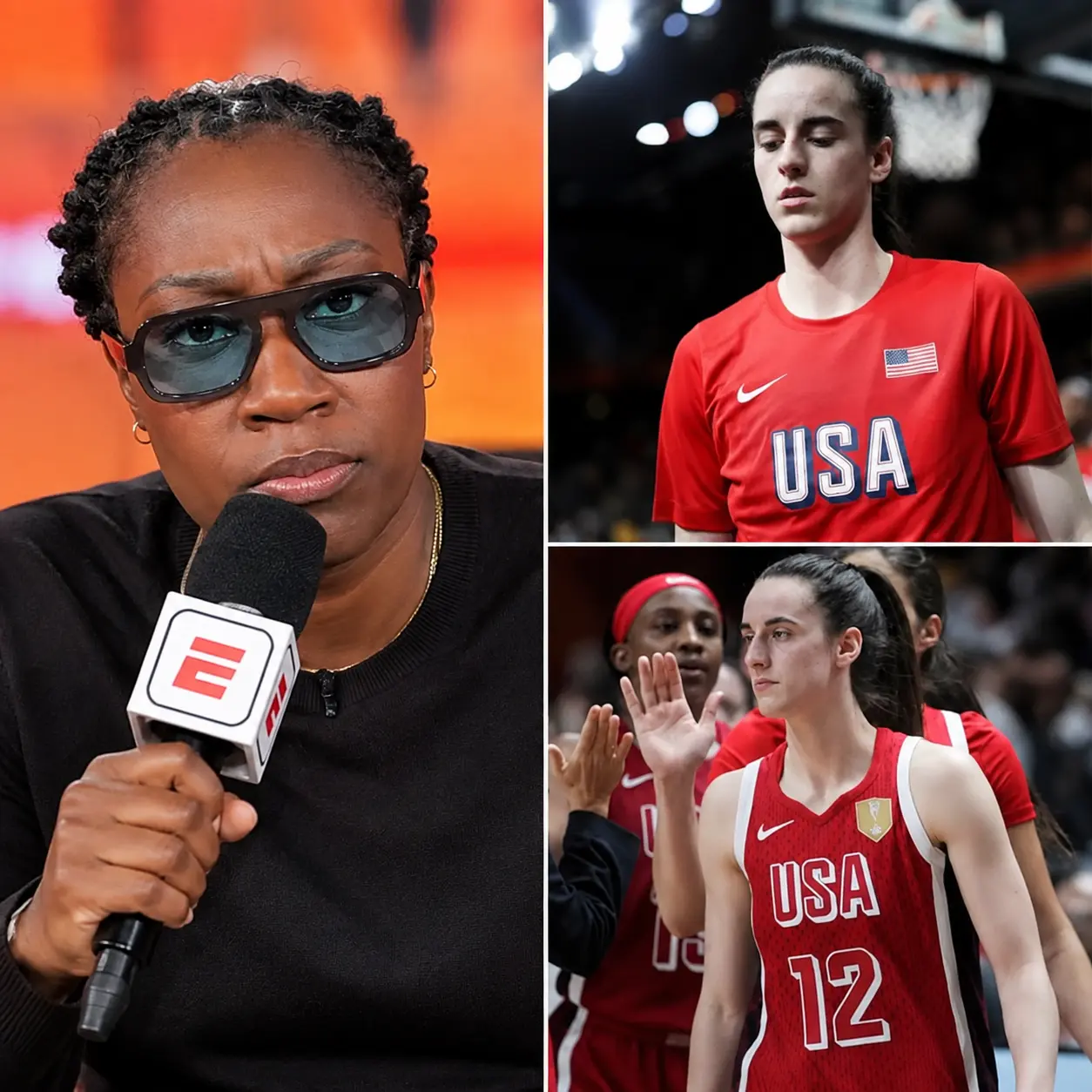
BERLIN — The tension inside the United States Women’s National Basketball team camp has officially spilled beyond the locker room walls, turning an undefeated run at the 2026 FIBA Women’s Basketball World Cup into one of the most polarizing tournaments in modern American basketball history. Despite punching their ticket to the quarterfinals against Hungary, the program finds itself under unprecedented scrutiny. The tipping point arrived not from outside commentators, but from within the fraternity of American basketball royalty itself, as three-time Olympic gold medalist Tina Charles offered an unvarnished assessment of the team’s internal dynamics and the persistent friction surrounding Caitlin Clark’s utilization.
Speaking to colleagues and former teammates following Team USA’s nail-biting 55-52 group stage escape against Italy, Charles pulled no punches about what she perceived as an intentional systemic strangulation of Clark’s playmaking ability. “You can disguise it through diplomatic press conferences, and you can hide it from casual fans who only see a final score,” Charles declared in remarks that rapidly rippled across the basketball landscape. “But you cannot hide it from people who truly understand this game. When you bring an elite offensive engine onto the hardwood and deliberately slow down the break, repeatedly look away from open transition lanes, and refuse to feed the hot hand, that is no longer about tactical execution. That is about protecting egos.”
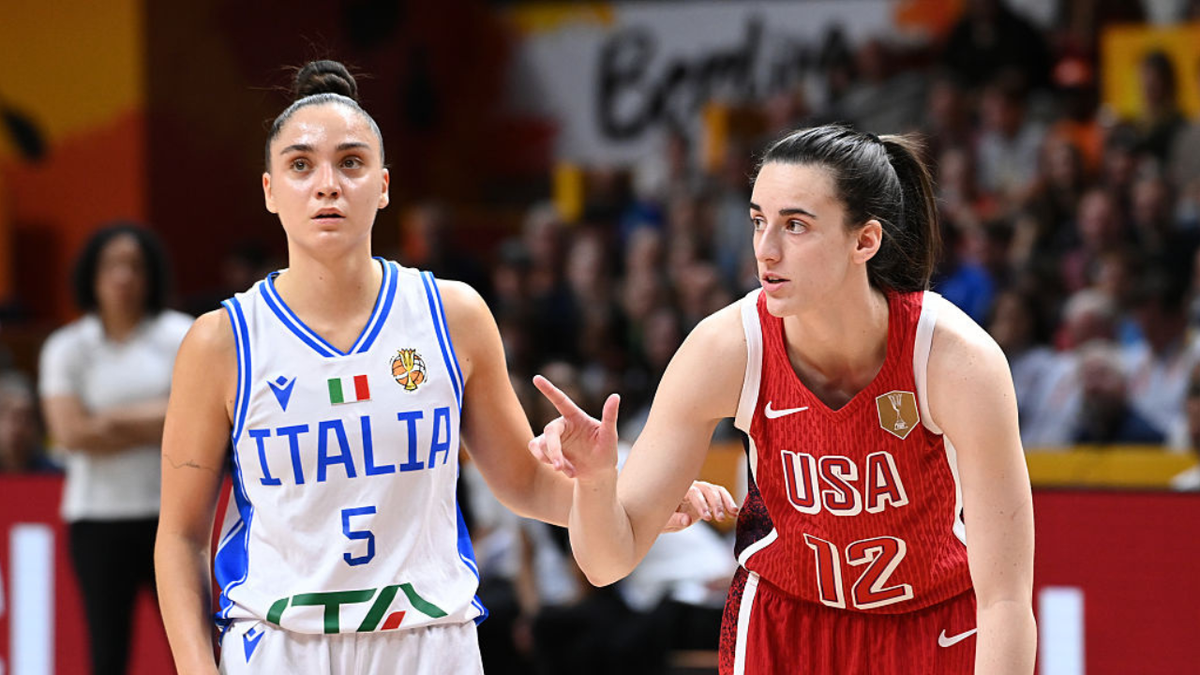
The controversy centers on the stark divergence between Team USA’s two distinct identities in Berlin. Through three preliminary round games, head coach Kara Lawson has maintained a rigid hierarchy, relying on veteran stalwarts Breanna Stewart and Chelsea Gray to command the starting unit within an isolation-heavy, half-court operating system. While the team blew past China 94-61 and dismantled the Czech Republic 105-64, their near-collapse against Italy exposed deep tactical vulnerabilities. In that contest, Clark experienced the lowest statistical output of her career, going 0-of-6 from the floor and finishing with a single point after being benched for the decisive closing minutes of the fourth quarter.
Yet, when allowed to orchestrate the second unit alongside young frontcourt partner Angel Reese and fellow guard Paige Bueckers, Clark has operated as the tournament’s most lethal distributor. Averaging 6.3 assists in just under twenty-two minutes per game, she broke Dawn Staley’s long-standing national tournament debut record with an 11-assist, zero-turnover masterclass against China, boasting an overall team-high plus-minus of +58 across the group stage. The stark contrast between her record-breaking floor vision and the static offense deployed during her minutes with the primary starters sparked immediate accusations of an orchestrated freeze-out.
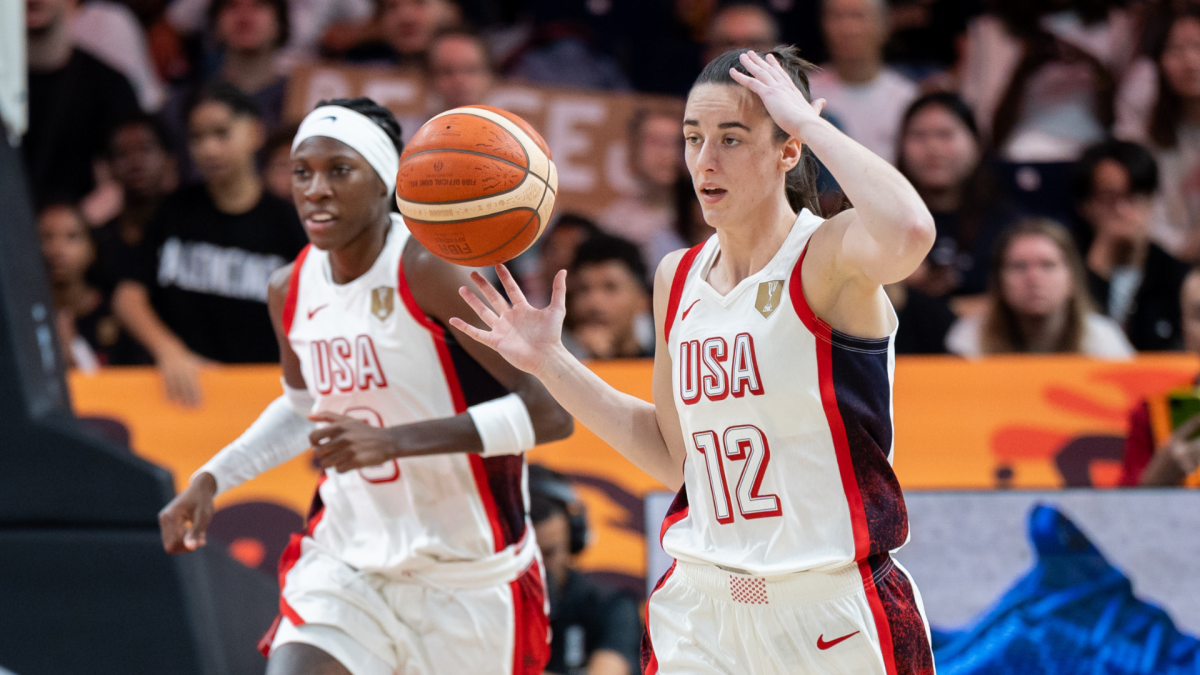
Charles pointed directly toward the subtle non-verbal friction occurring on the court, focusing on veteran ball-handlers who consistently bypass Clark on secondary breaks and early trail opportunities. “When someone with that level of gravity crosses half-court, the entire defensive shell shifts toward her,” Charles explained. “Any competent point guard exploits that gravity by hitting the trailer or feeding the weak-side cut immediately. Instead, we are watching veterans actively turn their backs, wave her off into the corner, and force contested mid-range jumpers against collapsing zone defenses. It is completely unnatural. They are treating a generational distributor like a spot-up bystander, and the tape does not lie.”
The critique became sharper as Charles addressed the broader cultural divide facing this iteration of the national squad. With cornerstone superstars A’ja Wilson and Kelsey Plum absent due to physical recovery, the locker room was widely expected to usher in the next generation of American international talent. Instead, the persistent effort to enforce traditional hierarchy over merit-based flow has generated palpable friction. Charles directed her concluding remarks toward the veteran leadership: “You are representing the United States of America on the world stage, not guarding personal territory. Every single time Caitlin checks into the game, certain players treat possession of the basketball like a zero-sum game for validation rather than playing winning basketball. You either adapt to elevate the team, or you step aside and let the kids run the floor.”
The fallout from these statements has intensified following FIBA’s latest power rankings update, which saw the United States stripped of the tournament’s number-one seed in favor of a surging French national squad that has demolished its opponents by an average margin of over thirty points. The drop to second place serves as an alarming wake-up call for a program riding a thirty-three-game World Cup winning streak. Analysts across the international circuit have noted that while the American roster possesses the deepest bench in the tournament—averaging 46.7 reserve points per game—the disconnect in backcourt chemistry leaves them unusually susceptible to disciplined European schemes.
Head coach Kara Lawson attempted to quell the growing media firestorm during Wednesday morning’s tactical briefing ahead of their knockout showdown with Hungary. “Our sole focus is winning basketball games, and that requires different combinations depending on matchups and defensive structures,” Lawson stated. “Caitlin has been exceptional in creating pace for our bench unit, and our veterans bring championship resilience that cannot be quantified on a basic stat sheet. We do not construct our game plans around external narratives, and every player on this twelve-woman roster knows their assignment.”
The timing of this internal crisis could not be more delicate. Waiting in Thursday’s quarterfinal clash is an opportunistic Hungarian squad anchored by WNBA frontcourt powerhouse Dorka Juhasz and team captain Virag Kiss-Takacs. While Hungary enters as heavy underdogs plagued by high turnover numbers, their interior presence and deliberately slow pace are designed to trap the Americans in the exact half-court mud that nearly derailed them against Italy.
Whether Team USA responds by loosening the reins on Clark or doubling down on veteran ball dominance will dictate more than just a semifinal berth. With the basketball world watching closely and legendary voices like Tina Charles refusing to look away, the quarterfinal against Hungary will reveal whether Team USA can unify its generational divide or let personal friction jeopardize gold in Berlin.