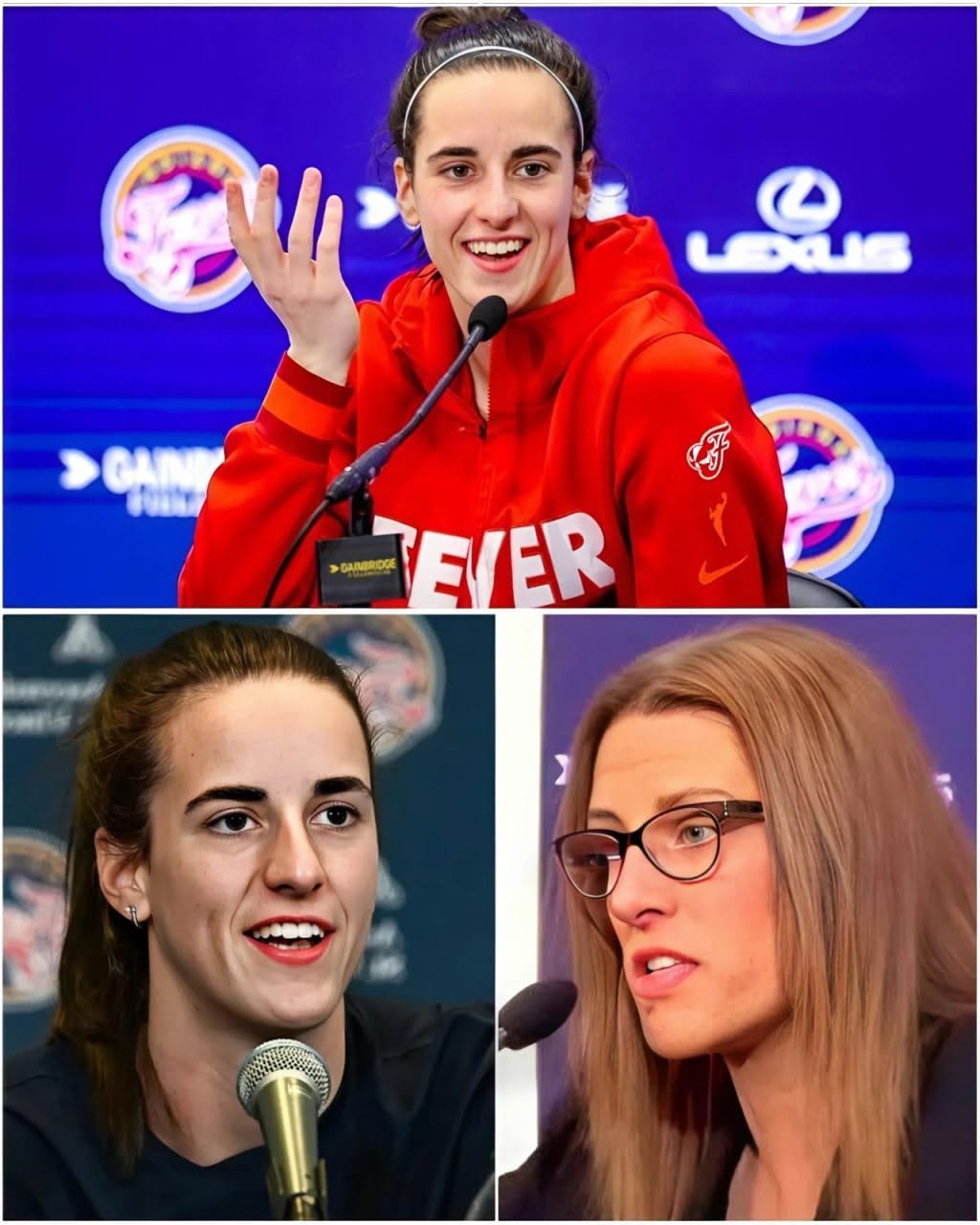
🚨 “STAND WITH CAITLIN OR WATCH IT ALL FALL!” — THE WNBA’S CAITLIN CLARK OFFICIATING CONTROVERSY IS GETTING LOUDER, BUT IS THE ENTIRE SYSTEM REALLY AT RISK?
A hit.
No whistle.
One of the biggest stars in women’s basketball looking toward the officials—and nothing happening.
For fans who have spent the last several seasons arguing that Caitlin Clark absorbs too much physical contact without receiving enough protection, moments like this have become more than individual basketball plays.
They have become evidence in a much larger debate.
And in 2026, that debate reached another level.
One particularly controversial incident came during an Indiana Fever game against Phoenix when Alyssa Thomas made contact with Clark’s throat with her fist.
The officials did not call a foul on the play.
But the story didn’t end there.
After reviewing the incident, the WNBA determined that Thomas’ action was a non-basketball play, assessed a Flagrant Foul 2 and suspended her for one game.
That sequence immediately raised an uncomfortable question.
If the league later determined the contact deserved that level of punishment, how did three officials miss it while standing on the court?
For Clark’s frustrated supporters, that question has become increasingly difficult to ignore.
It wasn’t simply about Thomas.
It wasn’t simply about one possession.
It tapped into a controversy that has followed Clark since she entered the WNBA.
From Chennedy Carter’s off-ball body check in 2024 to other hard-contact moments that generated national attention, fans have repeatedly argued that Clark’s enormous profile makes her both a target for opposing defenders and the center of unusually intense officiating scrutiny.
Sometimes the criticism has been justified.
Sometimes slow-motion replays have transformed ordinary physical basketball into something far more sinister online.
And sometimes the league itself has reviewed a play and determined that the original call—or lack of one—needed to be changed.
That distinction matters.
Because there is no credible evidence of some organized referee campaign against Caitlin Clark.
There is no established conspiracy inside the WNBA instructing officials to allow opponents to hurt her.
But there is a legitimate conversation about consistency, player safety and officiating standards.
And Clark’s visibility guarantees that every controversial call will be examined more intensely than almost anything else happening in the league.
That’s the reality of having a superstar whose influence extends beyond basketball.
Clark doesn’t merely attract Fever fans.
She attracts casual sports viewers.
College basketball fans followed her into the WNBA.
Children wear her jersey.
National television audiences tune in specifically to watch her.
Road arenas fill when Indiana arrives.
Every collision involving her therefore becomes larger than the collision itself.
For the WNBA, that’s both an opportunity and a responsibility.
The opportunity is obvious.
Clark’s popularity has helped introduce enormous numbers of people to women’s professional basketball.
But the responsibility is more complicated.
A professional league can’t officiate differently simply because one player is famous.
Officials can’t give Clark special treatment because she sells tickets.
At the same time, fame can’t become a reason to tolerate illegal contact either.
The standard has to remain basketball.
Was the contact legal?
Was it excessive?
Was it a basketball play?
Did it involve the head or neck?
Should it have been a common foul, flagrant foul or no-call?
Those questions need consistent answers whether the player involved is Clark, A’ja Wilson, Napheesa Collier or the final player on a team’s bench.
And that’s where trust becomes important.
Fans don’t expect referees to be perfect.
Basketball moves too quickly for perfection.
Players collide.
Officials have obstructed angles.
Calls are missed.
Judgment differs.
But when an obviously controversial incident is missed in real time and later punished by the league, frustration is inevitable.
Clark herself has also had a complicated relationship with officials.
Her competitiveness is visible.
She talks to referees.
She reacts to calls.
And as the 2026 season moved toward its final stretch, she accumulated enough technical fouls to put herself close to an automatic one-game suspension.
Clark recently explained that she has adjusted how she communicates with officials, emphasizing that she wants to work with them rather than allowing those interactions to escalate.
That part of the story matters too.
Player-official relationships are two-way relationships.
Officials must maintain control and consistency.
Players must manage frustration.
Coaches must advocate without allowing games to become constant confrontations.
But the idea that the WNBA is now on the verge of being “wiped out” because of its handling of Clark isn’t supported by the broader evidence.
In fact, the league’s influence continues to grow.
Its players are increasingly shaping the international basketball calendar, its stars have become global names, and the WNBA’s relationship with major international competitions has become significant enough that scheduling decisions are being adjusted around it.
So the league isn’t collapsing.
But that doesn’t mean it can dismiss fan frustration.
Quite the opposite.
Growth increases scrutiny.
The bigger the WNBA becomes, the less room it has for avoidable controversies involving officiating, discipline and player safety.
Millions more people are watching now.
Every mistake travels instantly.
Every replay gets slowed down.
Every no-call becomes a debate.
And every decision involving Caitlin Clark can dominate sports conversation for days.
That’s the real pressure facing the WNBA.
Not extinction.
Credibility.
Fans need to believe that the same standard applies on every possession.
Players need to believe officials will protect them from genuinely dangerous contact.
Officials need support, training and accountability rather than becoming villains every time a judgment call goes against someone’s favorite player.
And the league needs transparency when postgame review determines that something significant was missed.
The Thomas incident demonstrated that the disciplinary system can correct something after the fact.
But it also demonstrated why fans ask why the correction was necessary in the first place.
That’s a fair question.
What isn’t established is the more explosive claim—that referees and league executives have somehow collectively abandoned Clark or that the entire WNBA will collapse unless it “stands with Caitlin.”
The truth is less dramatic but more important.
The WNBA doesn’t need to stand with Caitlin Clark against everyone else.
It needs to stand for consistent officiating for everyone.
Protect Clark when the rules say she should be protected.
Penalize Clark when the rules say she should be penalized.
Apply that exact same standard to every opponent.
Because ultimately, the biggest threat isn’t one missed whistle.
It’s what happens when players and fans stop trusting what the next whistle—or silence—is supposed to mean. 🏀🔥