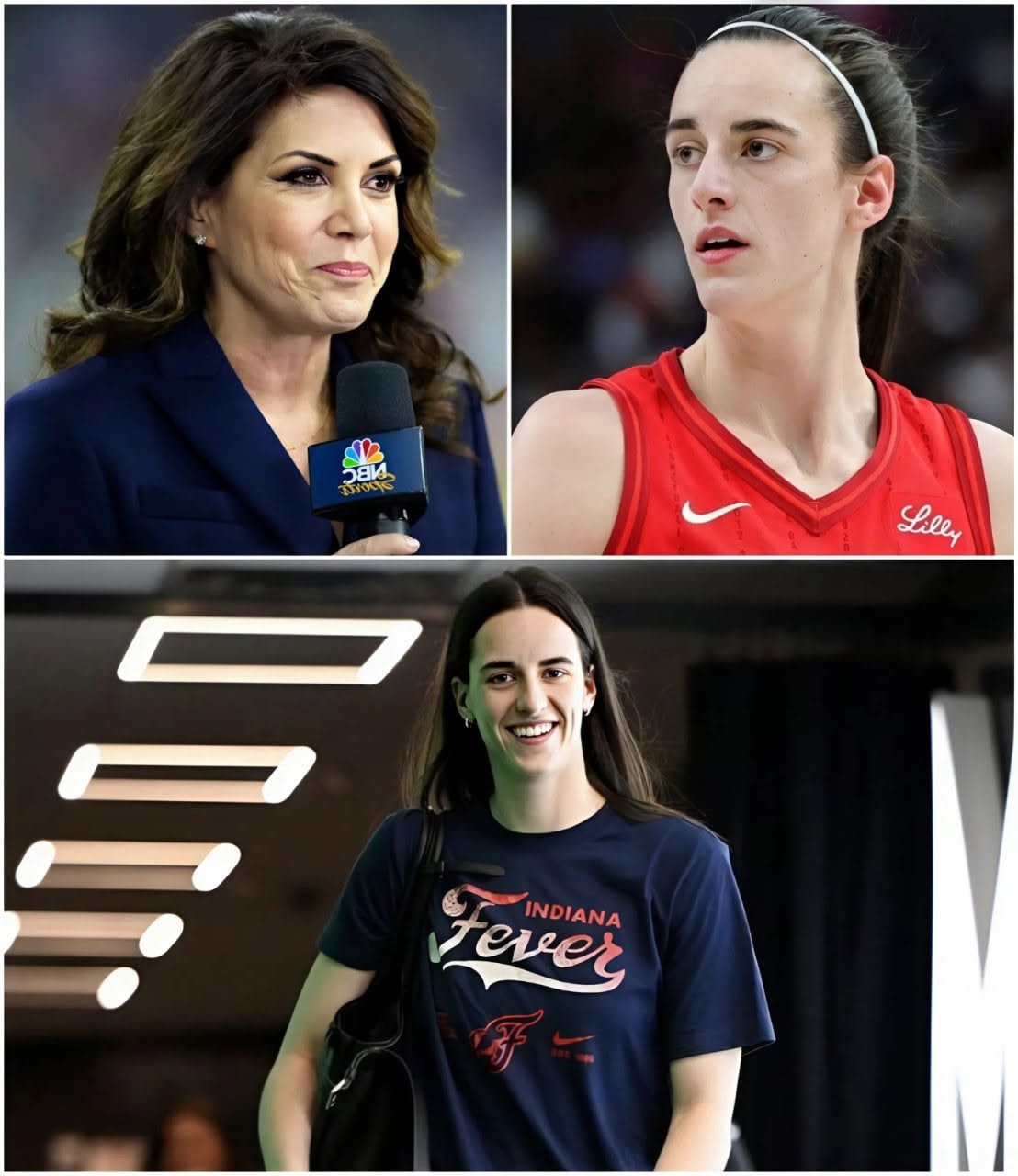
🚨 “SHE SAID WHAT EVERYONE ELSE WAS TOO AFRAID TO SAY.” — MICHELE TAFOYA’S ONE-WORD THEORY ABOUT CAITLIN CLARK JUST REIGNITED ONE OF THE WNBA’S BIGGEST DEBATES
One word.
Jealousy.
That was the explanation Michele Tafoya offered while discussing one of the most controversial Caitlin Clark debates to emerge from inside the WNBA.
And she didn’t present it as a minor possibility.
Tafoya argued that resentment toward Clark’s extraordinary popularity had influenced how some of her fellow players viewed her.
The controversy centered on WNBA All-Star voting.
Clark’s popularity with fans was overwhelming, but the player vote told a very different story.
In the 2025 voting, Clark finished first among guards in the fan component and fourth in the media component—but ninth among guards in voting by WNBA players.
That gap immediately generated debate.
How could one of basketball’s most recognizable stars receive such dramatically different evaluations from fans and fellow players?
There were legitimate basketball explanations available.
Clark had missed games because of injury.
Her shooting had gone through difficult stretches.
And All-Star voting inevitably involves subjective evaluations from people who may value different parts of the game.
Tafoya wasn’t convinced those explanations told the entire story.
She argued publicly that jealousy surrounding Clark had become impossible to ignore.
That is an opinion—not an established fact about the motivations of individual WNBA players.
But it resonated because it connected to a conversation that had followed Clark almost from the moment she entered professional basketball.
Clark didn’t arrive quietly.
She entered the league carrying extraordinary attention from her college career.
Television audiences followed.
Tickets moved.
Jerseys sold.
A player who hadn’t yet completed a single WNBA season was already generating attention comparable to—and sometimes greater than—veterans who had spent years building the league.
That creates an unusual locker-room dynamic.
Imagine spending a decade helping grow women’s basketball.
You play through seasons when mainstream sports coverage is limited.
You compete at an elite level.
You help establish the league.
Then a rookie arrives and suddenly reporters are asking you questions about her.
Again.
And again.
And again.
Tafoya has acknowledged that frustration could understandably exist.
But her argument is that the league should view Clark’s popularity as an opportunity rather than something to resist.
That is where the “jealousy” debate becomes complicated.
Professional athletes don’t have to like one another.
They don’t have to celebrate another player’s popularity.
And voting against someone doesn’t automatically prove resentment.
Players may evaluate basketball differently from fans.
A guard defending Clark directly might notice weaknesses that spectators don’t.
Another player may prioritize availability.
Another may simply believe several guards had stronger seasons.
Those explanations matter.
At the same time, the enormous gap between Clark’s popularity and her player ranking guaranteed questions.
And Tafoya gave those questions the most combustible possible answer.
Jealousy.
Her position wasn’t entirely new.
As early as 2024, Tafoya publicly suggested there appeared to be jealousy toward Clark among certain people in the WNBA.
She compared Clark’s ability to bring new attention to women’s basketball with the effect Tiger Woods once had on golf.
Her broader argument was simple:
Even if Clark’s overwhelming media attention frustrates other players, her popularity can benefit the entire sport.
That debate has only grown since.
Every hard foul involving Clark becomes national news.
Every disagreement becomes a viral clip.
Every opposing player’s comment is analyzed for hidden meaning.
Every ranking becomes evidence for one side or another.
Clark isn’t merely playing basketball anymore.
She has become the center of an argument about what happens when one athlete suddenly becomes much more famous than the league around her.
And that can create tension in any professional sport.
Superstars change ecosystems.
They change ticket prices.
They change media priorities.
They change television schedules.
They change which players reporters want to interview.
They can even change how teammates and opponents are perceived.
But none of that proves a coordinated effort against Clark.
That distinction is critical.
Tafoya’s comments represent her interpretation of the player vote.
They don’t establish the private motivations of dozens of individual WNBA players.
Unless those players explain their votes, nobody can know precisely why each ballot looked the way it did.
And perhaps that uncertainty is exactly why the story refuses to disappear.
Fans see Clark’s enormous impact.
They see packed arenas.
They see jerseys.
They see television attention.
Then they see a player vote ranking her ninth among guards.
Naturally, they ask why.
Some answer with basketball.
Others answer with availability.
Tafoya answers with jealousy.
There is probably no single explanation capable of accounting for every vote.
But there is a larger truth underneath the controversy.
Clark changed the conversation around women’s basketball.
That doesn’t erase the stars who came before her.
It doesn’t mean every accomplishment belongs to her.
And it certainly doesn’t mean other players are obligated to admire her.
But her ability to attract attention is undeniable.
The real question is what the WNBA does with that attention.
Does Clark’s popularity become a bridge that introduces millions of viewers to other great players?
Can new fans who arrive because of Clark eventually become fans of the entire league?
Can rivalries remain intense without becoming personal?
Those questions matter far more than determining whether every player personally likes Caitlin Clark.
Because eventually careers end.
Voting controversies disappear.
Viral clips get replaced.
But growth can remain.
Tafoya believes some resentment toward Clark has prevented people from fully embracing that opportunity.
Her critics can reasonably argue that she is assigning motives to players without enough evidence.
Both parts of the debate should be understood.
What cannot be denied is that her one-word explanation struck directly at an issue the WNBA has been wrestling with since Clark arrived:
What happens when one player becomes bigger than anyone expected, faster than anyone was prepared for?
Maybe the answer isn’t entirely jealousy.
Maybe it isn’t entirely basketball either.
But as long as Caitlin Clark continues generating this level of attention, every vote, every foul and every comment involving her will be examined for something deeper.
And Michele Tafoya just gave that debate the one word guaranteed to keep it burning:
Jealousy. 🔥🏀